0%

Smart glasses with camera promise a hands-free way to capture moments, follow directions, and stay connected. In 2026, the category includes discreet everyday frames and more feature-rich models with displays or voice controls. Yet the camera is only part of the experience. A bright outdoor clip may look sharp, while indoor footage can turn grainy or soft. Small details matter.

This guide compares seven options by camera performance, comfort, battery life, controls, and everyday usefulness. It also considers practical trade-offs: frame weight after hours of wear, how quickly recording starts, and whether audio remains clear beside a busy street. Specs can help, but they do not tell the whole story. Fit varies, and a feature that feels clever in a shop may become tiring during a commute.

Privacy deserves equal attention. A visible recording indicator, straightforward controls, and considerate use can help people nearby understand when the camera is active. No design removes every concern. The right pair depends on what you plan to capture, how often you will charge it, and how much you value a familiar look over extra features. This is not a perfect formula; product claims and real-world results can differ. The picks ahead aim to make those differences easier to judge, without treating the most expensive model as the automatic winner. Expect useful strengths, a few compromises, and details worth checking before you buy.
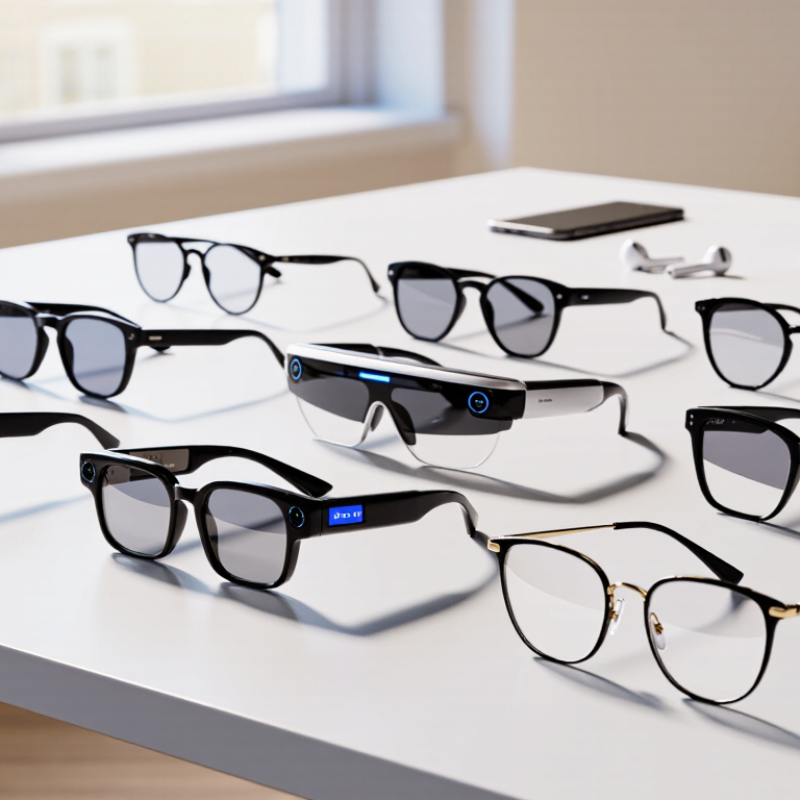
7 Best Smart Glasses with Camera in 2026

How Camera-Equipped Smart Glasses Work

Camera-equipped smart glasses capture light through a miniature image sensor, much like a phone camera. A small processor adjusts exposure, compresses images, and saves them locally or transfers them to a paired phone. Microphones and wireless radios support voice commands and connected features. Some glasses process requests on-device; others rely on a phone or internet connection. That choice affects response time, battery life, and usefulness when the signal drops. Small parts. Tight limits.

The camera’s position matters: a lens near the hinge may frame a scene differently from one centered above the nose. A tiny status light can show when recording is active, though people nearby may not notice it. Counterpoint Research reported that global smart-glasses shipments grew 210% year over year in the second half of 2024. That market growth signals interest, not proof that every camera system delivers clear footage or reliable privacy cues. It is easy to overlook those compromises.

Tips: Check camera placement, indicator visibility, and battery life before choosing a pair. Try capturing a short clip indoors and outdoors; glare and motion blur can surprise you. Also review whether image features need a connected phone or cloud access.

7 Best Smart Glasses with Camera in 2026 — How Camera-Equipped Smart Glasses Work

Video resolution affects the amount of visual detail a camera can capture. This chart compares pixels per frame for common video formats; it does not represent or rank any specific glasses.

Camera-equipped glasses use a small image sensor and lens to capture light, then process and encode the image as photos or video. Actual image quality also depends on factors such as sensor size, lighting, stabilization, and compression.

Key Criteria for Evaluating Smart Glasses in 2026

For camera-equipped smart glasses, evaluate the whole capture experience, not just the headline resolution. Check whether video stays steady while walking, voices remain clear outdoors, and controls work without repeated taps. Counterpoint Research reported that global smart-glasses shipments rose 210% year over year in the first half of 2024, reflecting fast-growing interest in this category. Growth alone proves little, though. Battery life matters more when recording drains power before lunch.

Privacy deserves equal weight. Look for a visible recording indicator, clear storage settings, and simple ways to delete or transfer footage. Pew Research Center found that 79% of U.S. adults were concerned about how companies used their data in a 2019 survey. That concern makes transparent data practices a practical buying criterion, not a bonus.

Fit the glasses for ten minutes, then check pressure at the nose and temples. Small discomfort becomes obvious on a long walk. Ratings can be imperfect, because face shape, lighting, and phone compatibility change the experience. Test those details before trusting a spec sheet.

Seven Leading Camera Smart Glasses of 2026 Compared

Seven leading camera smart glasses in 2026 differ more in comfort and controls than in headline features. One model may suit quick hands-free clips, while another offers clearer audio or longer recording sessions. Check camera resolution alongside stabilization; sharp footage can still look shaky when you walk. Small lenses also struggle indoors, especially under warm kitchen lights.

For daily use, compare seven practical factors: fit, camera quality, battery life, storage, audio, privacy indicators, and companion-app reliability. A lightweight frame feels less tiring during a long commute. Physical capture buttons are easier to find than touch controls when your hands are cold. Some designs record only short clips, so confirm recording limits before relying on them for an event. Battery estimates vary with settings and temperature.

Try the glasses in ordinary places, not just a bright showroom. Read a menu, walk past a window, and check whether the camera catches glare. Ask how recordings are transferred and deleted; clear controls matter as much as image quality. I would not judge them from one sample clip alone. Lighting, fit, and phone software can change the result, and reviews sometimes understate those trade-offs.

Features and Limitations of Each Model

A 2026 camera-glasses shortlist should compare practical trade-offs, not just image quality. Counterpoint Research reported that global smart-glasses shipments rose 210% year over year in the first half of 2025, signaling stronger demand but not proving every design is ready for daily use. Grand View Research valued the global smart-glasses market at about $1.93 billion in 2024 and projected 13.3% annual growth through 2030. The category is moving quickly.

Lightweight photo-first glasses are easy to wear, but often offer limited video controls. Open-ear camera glasses add hands-free voice features; expect modest audio and wind noise outdoors. Stabilized video models capture smoother walking footage, though their heavier frames can tire the nose. Prescription-ready versions improve everyday fit, but lens thickness and camera placement may affect framing. Small details matter.

Display-equipped glasses can show navigation or prompts, yet screens drain batteries and may be hard to read in bright sunlight. Modular-lens designs suit changing light, but add bulk and extra parts. Translation-focused models can provide live captions, although recognition may lag in noisy cafés or depend on a phone connection. Before choosing, test a short indoor clip and a sunny outdoor one. Check recording indicators, battery life, fit, and how easily footage transfers. Reviews often understate discomfort after several hours.

7 Best Smart Glasses with Camera in 2026 — Features and Limitations of Each Model

Model Camera and Capture Key Features Battery and Storage Main Limitations Best For
Model A
Everyday camera glasses
12 MP ultrawide camera; supports video capture up to 3K on compatible software and settings. Open-ear audio, voice controls, hands-free photo and video capture, and a companion mobile app. 32 GB built-in storage; battery life depends on recording, audio use, and settings. Limited recording time per clip; no in-lens display; footage may require a phone app to manage or share. Everyday photos, short clips, and hands-free audio.
Model B
Performance camera glasses
12 MP camera; supports 3K video capture, with recording duration and resolution affected by settings. Sport-oriented frame options, open-ear speakers, voice features, and hands-free capture. 32 GB built-in storage; manufacturer-rated battery life is for mixed use, not continuous recording. Bulkier styling than many everyday frames; intensive video use reduces battery life; no in-lens display. Outdoor activities and users who prioritize higher-resolution video.
Model C
Binocular 3D developer glasses
Two 3 MP cameras designed for stereoscopic capture; supports spatial photo and video workflows. See-through mixed-reality display, hand tracking, and tools for creating and testing immersive apps. Designed for relatively short active sessions; runtime varies with display and camera use. Developer-focused availability and software; shorter practical runtime; less suited to discreet, all-day wear. Developers and creators experimenting with 3D and mixed-reality capture.
Model D
Binocular AR camera glasses
16 MP camera for still images; video capabilities depend on the selected capture mode and software. Color see-through displays, spatial interfaces, and standalone augmented-reality features. Battery life is limited during camera and display use; storage and transfer options depend on configuration. Heavier and less discreet than basic camera glasses; limited battery life under demanding use. Augmented-reality experiences and occasional first-person capture.
Model E
Display-equipped camera glasses
8 MP autofocus camera; supports still photography and 1080p video capture. Monocular waveguide display, Android-based functions, and hands-free image capture. Battery performance varies substantially with display brightness, connectivity, and camera use. Display is primarily suited to simple information; camera and smart features can drain the battery quickly. Workflows that benefit from a small in-lens display and a built-in camera.
Model F
Modular AI camera glasses
Optional camera module with a 16 MP sensor; capture functions depend on the fitted module and app. Modular frame design, audio features, and AI functions that can use images captured by the camera module. Battery life and storage depend on the frame, camera module, and connected phone. Camera capability may require an add-on; feature availability can vary by module, app, and region. Users who want a configurable frame and optional camera functionality.
Model G
Compact AI camera glasses
5 MP camera for image capture; supported capture modes depend on the device software. Lightweight frame, voice-based AI features, and a companion app for processing or interacting with captured images. Relies on a connected phone for many functions; battery life varies with connectivity and AI use. Lower camera resolution than several alternatives; many smart features depend on an internet connection or phone. Lightweight wear and image-based AI assistance rather than high-resolution video.

How to Choose Smart Glasses for Your Needs

Choosing smart glasses with a camera in 2026 requires more than comparing megapixels. Start with your daily routine. A lightweight frame may suit commuting, while stronger hinges and water resistance help outdoor users. Check camera resolution, stabilization, microphone quality, and recording controls. A tiny lens can still produce shaky video.

Market research suggests continued growth, but forecasts deserve caution. Grand View Research estimates the global smart glasses market could expand at a 27.3% compound annual growth rate from 2024 to 2030. Meanwhile, IDC’s wearable-device reports show that comfort, battery life, and ecosystem compatibility strongly influence adoption. These findings support a practical rule: choose glasses that solve one repeated problem, such as hands-free notes, navigation, or short video capture. More features can also create more distractions.

Tips: Wear the glasses for at least 20 minutes before buying. Test them with prescription lenses if needed. Look for clear recording indicators, physical controls, encrypted storage, and transparent data policies. A camera that lasts six hours on paper may perform differently outdoors. I would also test call quality in a busy café, not only in a quiet room. Reviews sometimes miss this detail. Finally, consider repair support and software updates. A stylish frame becomes frustrating when its companion app stops improving. Always respect nearby people’s privacy and follow local recording rules.

FAQS

How do camera-equipped smart glasses capture images?

A miniature image sensor captures light like a phone camera. A small processor adjusts exposure, compresses images, and stores them locally or transfers them.

Do smart glasses need a phone or internet connection?

Some process requests on the glasses. Others depend on a paired phone or internet access. Weak signals can increase delays and reduce useful features.

Why does camera placement matter?

A lens near the hinge frames scenes differently from one above the nose. Your view may not match the recording. Test the angle yourself.

How can I judge camera quality in daily use?

Record short clips indoors and outdoors. Check glare, motion blur, and image stability while walking. Bright rooms can mislead you.

What should I know about battery life?

Recording can drain the battery before lunchtime. Usage settings and temperature also affect battery estimates. Numbers are not promises.

What privacy features should I check?

Look for a visible recording indicator, clear storage settings, and simple deletion controls. Nearby people may not notice a tiny light. That matters.

How important are comfort and fit?

Wear the glasses for ten minutes, then check your nose and temples. Small pressure becomes obvious during a long walk. Fit varies by face shape.

Are physical buttons better than touch controls?

Physical capture buttons can be easier to find with cold hands. Touch controls may need repeated taps. Neither option is perfect.

What should I compare before choosing smart glasses?

Compare fit, camera quality, stabilization, battery life, storage, audio, privacy indicators, and app reliability. Do not judge one sample clip alone. Lighting and phone compatibility can change everything.

Conclusion

This guide explores how smart glasses with camera combine compact imaging, microphones, wireless connectivity, and built-in controls to capture moments or support hands-free tasks. It explains the key criteria for evaluating models in 2026, including image quality, battery life, comfort, storage, connectivity, privacy indicators, and ease of use. These factors help readers compare options beyond headline features and understand what matters in everyday situations.

The guide also compares seven leading types of camera-equipped smart glasses and outlines the strengths and limitations of each, from lightweight designs for casual use to feature-rich options for more frequent recording. A practical selection section helps readers match their priorities—such as comfort, recording quality, or battery endurance—to the right pair, while encouraging considerate use and attention to others’ privacy.

Eleanor

Eleanor

Eleanor is a professional marketing specialist with in-depth knowledge of the company’s products and a strong understanding of how they can support customers’ needs. She regularly contributes expert articles to the company website, sharing clear, practical insights that help readers understand......