0%

Smart audio glasses have moved beyond novelty. In 2026, buyers can compare open-ear speakers, hands-free calls, voice assistants, and camera features in frames designed for everyday wear. The differences are practical: how clearly a podcast sounds beside traffic, whether a call stays intelligible outdoors, and how comfortable the temples feel after several hours. Small details matter.

The category sits within a wider smart-glasses market. Grand View Research estimated that market at USD 1.93 billion in 2024 and projected a 13.4% compound annual growth rate from 2025 to 2030. Its figures cover smart glasses broadly, not audio-only models, so they should not be read as sales forecasts for this list’s exact category. Market estimates also vary by product definition. That distinction is easy to miss.

At Meta Connect 2023, Meta CEO Mark Zuckerberg described the Ray-Ban Meta glasses as “the first glasses that are built from the ground up for Meta AI.” His comment reflects a wider shift: glasses are becoming interfaces, not just speakers. But convenience is not the whole story. Battery life, sound leakage, fit, and privacy controls deserve equal attention. Some compromises remain. This guide compares ten smart audio glasses available to buyers in 2026, focusing on useful features, everyday comfort, and limits worth considering before purchase.
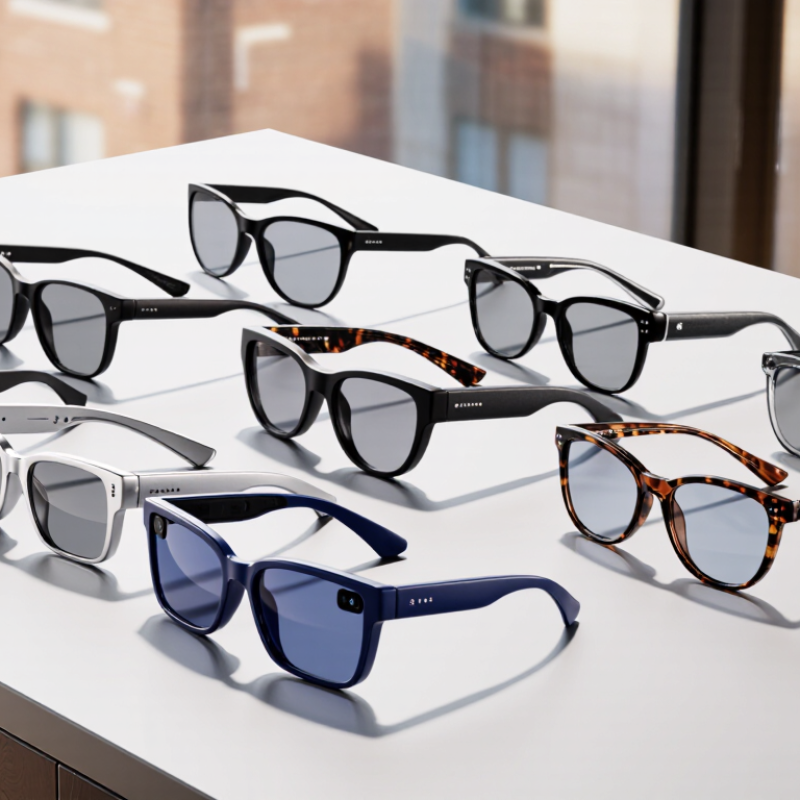
10 Best Smart Audio Glasses to Buy in 2026

What Smart Audio Glasses Are and How They Work

Smart audio glasses look like ordinary frames, but small speakers sit near the ears, usually in the arms. Tiny microphones capture calls and voice commands. A wireless chip sends audio from a phone, while buttons or touch panels control playback. Some models add motion sensors or voice assistants; others keep the feature set simple. They do not usually seal the ear canal, so nearby sounds remain easier to hear. Still, open-ear audio can be audible to people close by, especially in a quiet room.

The Bluetooth SIG’s 2024 Market Update projects annual Bluetooth device shipments will reach 7.5 billion by 2028. That figure covers many device types, not smart glasses alone, but it shows how widely the underlying connection technology is used. In practice, sound quality depends on speaker placement, frame fit, and the surrounding noise. A loose temple can make voices seem thin. I’ve found fit is easy to underestimate; the frames may feel unfamiliar at first. That matters.

Tips: Test a call in a quiet room, then near ordinary street noise. Keep volume moderate, check microphone clarity, and see whether the frames stay comfortable after an hour. Don’t assume every pair has the same battery life or privacy features; compare the specifications and test the controls before relying on them daily.

Smart Audio Glasses: How Sound Works

Smart audio glasses use small speakers near the ears to play sound, while built-in microphones capture voice and Bluetooth connects the glasses to a phone. The chart compares two reference frequency ranges; it does not represent the measured output of any particular glasses.

The traditional telephone speech band is approximately 300–3,400 Hz. The commonly cited human hearing range is approximately 20 Hz–20 kHz, though hearing varies between individuals.

Key Features to Compare When Choosing Audio Glasses

When comparing smart audio glasses, start with comfort and sound placement. The speakers should sit close enough to your ears for clear voices without pressing against your temples. Try them for at least ten minutes; a frame that feels light in a shop may pinch during a walk. Fit matters. Check whether the arms suit your head width and whether prescription lenses can be fitted if you need them.

Open-ear audio helps you hear nearby traffic and conversation, but it can also leak sound in a quiet room. Test a podcast at your usual volume, then ask someone nearby whether they can hear it. Compare call microphones outdoors, where wind can make speech less clear. Small differences matter. A product’s advertised battery life may vary with volume, calls, and weather, so look for independent testing alongside the manufacturer’s figures.

Check how the glasses connect to your phone, how easy the controls are to use, and whether the companion app explains its privacy settings clearly. Physical buttons can be easier to find while walking than tiny touch-sensitive areas, though they may look less seamless. Also inspect water-resistance details and charging options before buying. Specs do not tell the whole story. I’d still want to wear a pair on a real commute before trusting its comfort claims.

10 Best Smart Audio Glasses to Buy in 2026 - Key Features to Compare When Choosing Audio Glasses

Type to Consider Best For Key Features to Compare Practical Buying Check Main Trade-Off
1. Everyday open-ear glasses Daily listening while staying aware of nearby sounds Speaker placement, volume controls, Bluetooth compatibility, and fit Open-ear speakers do not seal the ear; sound may be harder to hear in noisy places and may be audible to people nearby. Less isolation and bass than sealed earbuds
2. Prescription-ready frames People who need corrective lenses Lens replacement support, prescription range, frame fit, and optical-service availability Confirm that the exact frame accepts your prescription; strong prescriptions and progressive lenses may have compatibility limits. Lens options can narrow frame choices or add cost
3. Sunglasses with audio Outdoor walks, commuting, and casual listening UV protection labeling, lens tint, replaceable lenses, and outdoor call quality Check the stated UV protection and whether lenses are suitable for your activities; tint alone does not establish UV protection. Less useful indoors; lenses and frames may be less adaptable
4. Lightweight minimalist frames All-day wear and users sensitive to frame weight Total weight, balance across the nose and ears, temple thickness, and button placement Try the fit if possible: weight distribution and temple pressure can matter as much as the stated total weight. Smaller frames may leave less room for batteries and speakers
5. Call-focused glasses Hands-free calls and voice assistant use Microphone count and placement, wind-noise handling, call controls, and voice pickup Look for real-world call tests in wind and street noise; microphone specifications alone do not guarantee clear calls. Open microphones can pick up ambient noise
6. Long-listening glasses Podcasts, audiobooks, and extended listening sessions Claimed playback time, charging method, charge time, and battery replacement or service options Compare battery claims under similar conditions; volume, calls, and feature use can change actual runtime. Longer runtime may require a larger frame or more frequent charging case use
7. Active-outdoor glasses Walking, light exercise, and changing weather Water-resistance rating, frame grip, secure fit, and physical-button usability Check the exact IP rating and its stated limits. Water resistance does not automatically mean the glasses are suitable for swimming. Sweat or rain protection varies by model
8. Travel-friendly glasses Frequent travelers and people who switch between devices Bluetooth multipoint, pairing process, controls, charging accessories, and folding or storage design Multipoint support is not universal; verify whether the glasses can stay connected to two devices at once. Open-ear audio offers limited isolation in aircraft and other loud environments
9. Style-first audio frames Users prioritizing everyday appearance and frame choice Available shapes, colors, frame dimensions, lens options, and discreet control design Check the frame measurements against glasses you already find comfortable; photos do not show fit accurately. Some styles may offer fewer lens or fit options
10. Value-focused audio glasses First-time buyers and occasional listeners Bluetooth stability, warranty, replacement parts, return policy, and essential controls Prioritize a usable fit, clear return terms, and support availability over headline features you may not use. Lower prices may mean fewer frame, lens, or support options

Comparison note: These are product categories and buying criteria, not model-specific specifications. Exact battery life, water resistance, lens compatibility, and connectivity features vary by product; verify them with the seller before buying.

Ten Notable Smart Audio Glasses Available in 2026

Ten notable smart audio glasses in 2026 differ less by appearance than by how they fit daily routines. A lightweight open-ear pair suits short walks and podcasts, while a sturdier everyday frame may feel better during long commutes. A prescription-ready option helps wearers avoid juggling separate eyewear. Photochromic lenses adapt as lighting shifts, though they may not darken evenly in every setting. A model with physical buttons can be easier to control than touch-sensitive arms. Small detail. Try the controls before buying.

For calls, look for microphones that keep speech clear outdoors, not just in a quiet room. A travel-focused pair may offer longer battery life, while a compact design is easier to pack. Some frames emphasize voice-assistant access; others prioritize balanced music playback. A sports-oriented fit should stay secure during movement, and a fashion-first frame may blend more naturally with office clothing. Finally, consider a budget option with basic playback, or a premium design with adjustable sound settings. Open-ear speakers let you hear nearby sounds, but people close by may also hear your audio. Fit, lens comfort, and sound leakage vary from person to person. Specs help, but they do not tell the whole story.

How the Leading Models Differ in Design and Performance

The ten best smart audio glasses in 2026 differ most in how comfortably they balance sound, fit, and everyday style. Slim acetate frames can look like ordinary eyewear, while sportier designs often use broader temples to house larger batteries and speakers. That extra bulk may feel noticeable after an hour. Fit is personal. Open-ear speakers keep the ear canal unobstructed, but sound can become harder to hear beside traffic or a busy café. Microphone quality also varies: test a call outdoors, not just in a quiet shop.

Performance claims need context. Grand View Research’s Smart Glasses Market report estimated the broader smart-glasses market at USD 1.93 billion in 2024, with projected growth through 2030. That figure includes more than audio-only models, so it signals category momentum, not proof that every pair sounds better. Compare stated battery life with your likely use, and check whether the controls work without looking down. Small details matter.

Tips: Try the glasses with your usual prescription or sun lenses, if supported. Play a familiar podcast at a moderate volume, then make a short voice call. Notice temple pressure, speech clarity, and sound leakage. These quick checks reveal more than a sleek product photo—and personal comfort can still surprise you.

Choosing a Pair for Your Needs, Budget, and Daily Use

10 Best Smart Audio Glasses to Buy in 2026

Choosing a pair starts with how you will wear it. For commuting, prioritize clear calls and controls you can use without looking down. For walks or errands, comfort and battery life may matter more than powerful sound. Check the bridge fit and temple pressure; even a light frame can pinch after an hour. Fit comes first.

Think about your budget alongside the features you will use every day. A higher price may buy better microphones or longer battery life, but not necessarily a better fit. Compare charging time, phone compatibility, warranty terms, and replacement-part availability. If possible, try the frames on and make a short call in a mildly noisy place. A quiet showroom can make audio seem better than it is outdoors. That test is imperfect, but useful.

Tips: Match the frame shape to your prescription needs, and confirm whether lenses can be changed. Check how much sound nearby people can hear at your usual volume. Keep controls simple if you plan to use them while carrying bags or wearing gloves. Also consider a return window; comfort can change after several days of real use.

FAQS

What should I check first when trying audio glasses?

Check temple pressure and speaker placement. Wear them for ten minutes, not just a quick shop try-on.

Can open-ear speakers help me stay aware of nearby sounds?

They leave your ear canals open, so traffic and conversation may remain audible. Busy streets can still drown out audio.

How can I check whether sound leaks?

Play a podcast at your usual volume in a quiet room. Ask someone nearby if they can hear it. Small test, useful answer.

What is the best way to assess call quality?

Make a short call outdoors. Wind can make speech less clear, even when a quiet-room demo sounds fine.

Should I trust the advertised battery life?

Treat it as an estimate. Volume, calls, and weather can change battery use; independent testing adds helpful context.

What should prescription lens users look for?

Check whether the frame supports your prescription lenses. Try the glasses with your usual lenses if possible.

Are physical controls better than touch controls?

Physical buttons can be easier to find while walking. Touch areas may look cleaner, but they can be hard to locate without looking.

What details are easy to overlook?

Check water-resistance information, charging options, app privacy settings, and phone connection steps. Specs do not tell the whole story.

How should I compare frame designs?

Slim frames may feel less bulky, while broader temples can hold larger speakers or batteries. I’d still test them on a real commute; comfort claims can surprise you.

Conclusion

Smart audio glasses combine everyday eyewear with built-in speakers, microphones, and wireless connectivity, allowing users to listen to audio and take calls without covering their ears. This guide explains how the technology works and highlights the features worth comparing, including sound quality, battery life, comfort, connectivity, privacy controls, durability, and prescription options. It also surveys ten notable styles available in 2026, showing how designs and performance can vary in fit, audio clarity, controls, and suitability for different settings.

The best pair depends on how you plan to use it. Consider whether you want glasses for commuting, exercise, work, or casual listening, and weigh your budget against the features you will use most. By comparing practical details rather than focusing on specifications alone, readers can find smart audio glasses that feel comfortable, suit their daily routines, and offer a useful balance of sound, convenience, and value.

Amelia

Amelia

Amelia is a professional marketing specialist with a strong understanding of the company’s products, services, and customer needs. She regularly contributes to the company website, sharing practical, well-researched blog articles that explain product features, highlight useful applications, and......