CE Certified Industrial Smart Glasses Product Lineup
Explore our flagship OEM/ODM wearable hardware solutions engineered for high-precision enterprise applications, remote assistance, multi-modal vision AI, and immersive spatial computing.
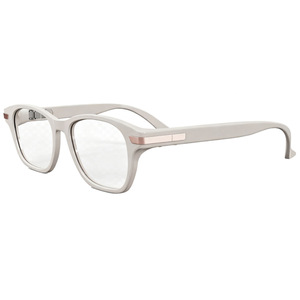
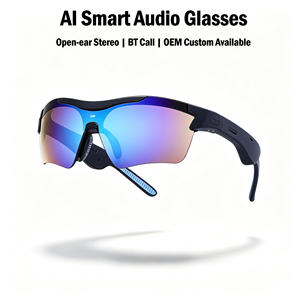
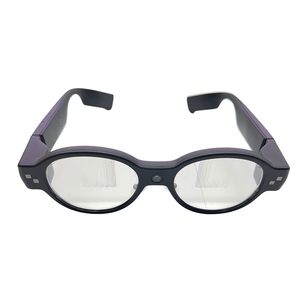
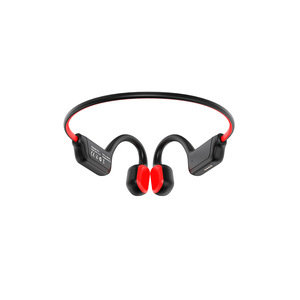
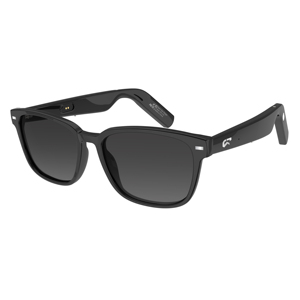
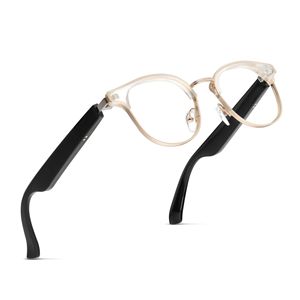
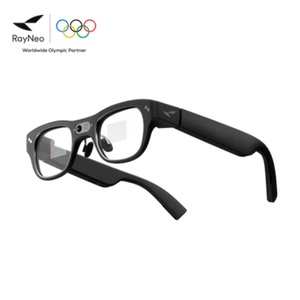
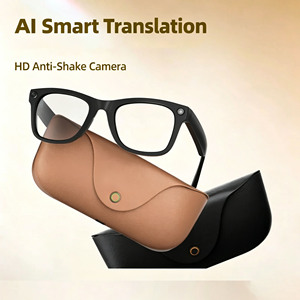
Executive Whitepaper: The Evolution of Industrial Smart Glasses Manufacturing
A deep dive into regulatory compliance, spatial computing architectures, and OEM/ODM hardware engineering for global enterprise B2B procurement buyers.
The global industrial landscape is undergoing a structural paradigm shift towards hands-free spatial computing and context-aware workforce augmentation. As a premier CE certified industrial smart glasses manufacturer and exporter, IMI Technologies stands at the nexus of micro-optics innovation, embedded Artificial Intelligence, and ultra-lightweight ergonomics. Modern industrial workplaces—spanning complex aerospace assembly lines, offshore energy platforms, intra-logistics sorting hubs, and field diagnostic teams—demand wearable interfaces that seamlessly bridge physical operations with real-time digital intelligence.
Achieving international export compliance requires stringent adherence to safety and electromagnetic standards. Our complete smart eyewear portfolio carries full CE Certification (EMC Directive 2014/30/EU, Low Voltage Directive 2014/35/EU, and Radio Equipment Directive 2014/53/EU) alongside EN 62471 photobiological eye safety compliance. This technical foundation guarantees that our optical waveguides and high-frequency wireless modules maintain structural and electrical integrity under rigorous industrial conditions, shielding both workers and sensitive factory infrastructure from interference or ocular strain.
Beyond baseline regulatory conformity, our enterprise smart glasses integrate specialized hardware sub-systems: custom-tuned open-ear acoustic transducers, multi-element beamforming microphone arrays with noise suppression algorithms (up to 45dB environmental noise cancellation), high-resolution optical image stabilization (OIS) camera sensors, and low-power MicroLED display engines capable of producing up to 3,500 nits of outdoor-readable luminance. By controlling the entire manufacturing value chain—from optical wave-guide etching to SMT printed circuit board assembly—we empower global brand partners and enterprise system integrators with scalable OEM and ODM solutions tailored to exact operational workflows.
Diffractive Optical Waveguides
Utilizing high-index glass substrates with surface relief gratings (SRG), our binocular optical engines deliver 85%+ transparency, full-color RGB output, and eye-box tolerance exceeding 12x10mm for effortless visual alignment during intense activity.
Directional Spatial Audio
Dual directional speakers positioned above the temporal bones project precise acoustic waves toward the ear canal while minimizing sound leakage by 92%, ensuring confidential voice translation and crystal-clear calls without blocking ambient awareness.
Edge AI Vision & Processing
Onboard Neural Processing Units (NPUs) process vision model inferencing locally. Perform real-time 1D/2D barcode scanning, optical character recognition (OCR), component recognition, and multi-lingual voice transcription with sub-second latency.
Technological Trends Driving Enterprise Smart Eyewear (2025–2030)
Key technical advancements re-shaping industrial wearable procurement, hardware architectures, and NPU integration.
Understanding the multi-year trajectory of wearable head-mounted displays is vital for corporate procurement directors and supply chain strategists. Over the coming decade, industrial smart glasses are transitioning from peripheral diagnostic accessories to primary human-machine interfaces (HMI). Based on our R&D roadmap and global market intelligence, four foundational technology vectors define this evolution:
1. Waveguide Efficiency & MicroLED Miniaturization: Legacy smart glasses suffered from bulky reflective prisms or low-luminance birdbath optical engines that failed under direct sunlight. The convergence of monolithic MicroLED displays (pixel pitch < 3.5µm) with volume holographic grating (VHG) waveguides enables sleek, everyday spectacle form factors with luminous efficacy exceeding 5.0 cd/A. This architectural evolution permits field technicians to operate in outdoor environments up to 100,000 lux without requiring bulky tinted sun-shields.
2. Multi-Modal On-Device Large Language Models (LLMs): Wireless tethering latency can paralyze mission-critical operations. Next-generation smart eyewear integrates low-power system-on-chips (SoCs) hosting quantized quantized NPU models (1B to 3B parameter models). This allows workers to execute natural voice queries—such as "Retrieve step 4 wiring schematic for Model-X transformer"—and receive instantaneous visual overlays directly in their field of view without active cloud connectivity.
3. Advanced Ergonomics & Thermal Dissipation: Industrial deployment demands continuous 8 to 12-hour wearable comfort. Modern smart glasses utilize high-grade lightweight frames (such as aerospace titanium alloys and Swiss Grilamid TR90 memory polymers), limiting total frame weight to under 48 grams. Advanced phase-change material (PCM) thermal pads and graphite heat-spreaders efficiently draw thermal energy away from the temples, preserving battery longevity and ensuring skin surface temperatures remain safely below EN 60950-1 touch limits.
4. Modular Battery Architecture & Hot-Swappable Power: Power management remains a critical vector for continuous shifts. Modern industrial smart glasses incorporate dual-cell battery topologies within the temple arms, balanced with ultra-fast USB Type-C magnetic charging ports. Energy efficiency optimizations, including proximity-based screen auto-sleep sensors and dynamic refresh rate adjustments (30Hz to 120Hz), extend operational runtime up to 14 hours for voice-centric models and 6 hours for continuous video streaming workflows.
Technical Specifications & Product Matrix
Comprehensive engineering parameter comparison across our industrial enterprise hardware series.
| Hardware Parameter | AI Waveguide AR Series | Pro Audio & Vision Series | Bone Conduction Sports/Work | Ultra-Light Audio Eyewear |
|---|---|---|---|---|
| Display Technology | Full-Color MicroLED + SRG Waveguide | Monochrome / Optical HUD (Optional) | N/A (Audio-Focused) | N/A (Audio-Focused) |
| Peak Luminance | Up to 3,500 nits | 1,800 nits | N/A | N/A |
| Camera Module | 8MP OIS / 1080p 60fps Video | 8MP Ultra-Wide Angle | Optional Inspection Cam | N/A (Privacy-Shielded) |
| Wireless Connectivity | Wi-Fi 6, Bluetooth 5.4, BLE | Bluetooth 5.3 + EDR | Bluetooth 5.3 / 32GB Internal | Bluetooth 5.4 Low Latency |
| Acoustic Architecture | Dual Beamforming Mics + Spatial Audio | Noise-Canceling Open-Ear Speakers | IP68 Bone Conduction Transducers | Dual Open-Ear Polarized Audio |
| Battery Capacity / Runtime | 450mAh / 6-8 Hours Active | 380mAh / 10 Hours Active | 500mAh / 12 Hours Continuous | 280mAh / 11 Hours Audio |
| Ingress Protection | IP65 Dust & Water Resistant | IP54 Splash Proof | IP68 Fully Submersible | IPX4 Sweat Resistant |
| Compliance Certifications | CE, RED, FCC, RoHS, EN 62471 | CE, FCC, RoHS, ISO9001 | CE, IP68, MSDS, UN38.3 | CE, LVD, EMC, FDA Lens Cert |
Global Sourcing & Procurement Trends for B2B Buyers
Strategic considerations for international distributors, system integrators, and OEM brand buyers.
As corporate IT departments and operational technology (OT) teams scale their wearable deployments, procurement criteria are evolving beyond basic unit cost. Global B2B buyers now prioritize manufacturers capable of offering comprehensive hardware-software co-design, full regulatory backing, and lifecycle supply chain security. When evaluating factory partners for industrial smart glasses, enterprise buyers should focus on three critical procurement vectors:
Customization Depth (OEM & ODM Flexibility): Generic off-the-shelf consumer glasses rarely meet industrial field requirements. Procurement managers require custom firmware building, Android/Linux SDK accessibility for enterprise software integration (e.g., SAP Work Clearance Management, PTC Vuforia, Microsoft Teams Remote Assist), specialized prescription (Rx) lens clip-ins, and bespoke frame branding. Our manufacturing facility provides deep board-support-package (BSP) level customizations and private-label packaging to ensure rapid market deployment.
Supply Chain Resilience & Quality Assurance: Electronics procurement in the spatial computing sector requires transparent component sourcing. High-reliability optical modules, Japanese micro-capacitors, and certified lithium-polymer battery cells with thermal cut-off circuitry are non-negotiable. Our ISO9001 certified production lines execute 100% automated optical inspection (AOI), acoustic spectrum testing, drop testing (1.5m impact resistance), and environmental chamber cycling (-20°C to +65°C) to guarantee a mean time between failures (MTBF) exceeding 30,000 operational hours.
Privacy Architecture & Regional Regulatory Readiness: With stringent global data protection framework implementations (GDPR in Europe, CCPA in North America), enterprise buyers frequently require custom camera-free configurations for secure defense, pharmaceutical, or automotive prototype facilities. Offering parallel product tracks—specifically Camera-Integrated Vision AI models vs. Privacy-First Open-Ear Audio models—allows global exporters to serve diverse commercial venues without regulatory friction.
CE & International Certifications
Fully compliant with CE, FCC, RoHS, and RED directives. Complete test reports and declaration of conformity (DoC) provided for instant European Union and global market clearance.
Turnkey OEM & ODM Services
From custom industrial optical wave-guide tooling and acoustic cavity tuning to specialized software SDKs and corporate identity packaging, we bring your hardware concepts to mass production.
Scalable Export Logistics
Direct factory shipping with established logistics routes across North America, Europe, Southeast Asia, and the Middle East. Fast-track sample dispatch within 48 hours for evaluation.
Frequently Asked Questions (FAQ) for Enterprise Procurement
Detailed answers to technical, regulatory, and sourcing questions frequently asked by industrial buyers.
What specific CE standards do your industrial smart glasses meet for European export?
Our complete range of industrial smart glasses complies with all mandatory directives required for the CE mark in the European Economic Area (EEA). Specifically, our hardware undergoes rigorous testing for: 1) Radio Equipment Directive (RED 2014/53/EU) covering Wi-Fi, Bluetooth, and BLE frequencies; 2) Electromagnetic Compatibility (EMC 2014/30/EU) ensuring immunity against industrial electro-magnetic radiation; 3) Low Voltage Directive (LVD 2014/35/EU) for battery safety and charging power management; and 4) EN 62471 Photobiological Eye Safety certifying that optical waveguides and MicroLED displays pose zero hazard to human eye structures during prolonged shift wear.
How do AI Waveguide Smart Glasses perform under direct sunlight in outdoor field operations?
Our flagship optical waveguide models feature high-luminance MicroLED display engines producing up to 3,500 nits of physical optical brightness at the eye-box. Combined with high-transparency surface relief grating (SRG) optics and optional polarized electrochromic or UV400 clip-on lenses, visual overlays remain crisp, high-contrast, and fully readable even under direct outdoor sunlight exceeding 80,000 lux. This makes them ideal for solar farm inspections, aviation maintenance, and outdoor logistics management.
Can your smart eyewear be customized for privacy-sensitive workplaces where cameras are prohibited?
Yes. We manufacture dedicated Camera-Free Smart Audio Glasses designed specifically for privacy-restricted industrial venues such as semiconductor cleanrooms, automotive prototype studios, defense contractor sites, and financial institutions. These models retain complete voice-assistant capabilities, Bluetooth 5.4 calling, open-ear acoustic playback, and all-day comfort while completely omitting optical camera sensors and internal video recording buses to comply with strict workplace privacy policies.
What software development kits (SDKs) and operating systems are supported for custom enterprise app deployment?
Our AR and AI smart glasses run on an optimized, low-latency Android-based operating system (Android 11 / 13 Wear core). We provide enterprise partners with an open, comprehensive C++ and Java Android SDK, supporting native Integration for Unity, OpenXR, and WebRTC remote assistance protocols. System integrators can effortlessly compile and deploy proprietary Android APKs for voice-controlled workflow guidance, real-time telemetry rendering, or remote expert video streaming.
What are the Minimum Order Quantities (MOQ) and lead times for OEM/ODM factory customization?
For standard stock products and evaluation samples, there is no strict MOQ, and dispatch occurs within 48 to 72 hours. For custom OEM branding (including custom frame colors, laser-etched corporate logos, customized startup splash screens, and localized user manuals), the standard MOQ starts at 500 units with a manufacturing lead time of 2 to 3 weeks. Full ODM engineering projects involving custom optical waveguide toolings or PCB redesigns are managed via dedicated project milestones with prototype delivery typically within 6 to 8 weeks.
How does open-ear audio technology compare to traditional bone conduction for noisy industrial environments?
While bone conduction vibrates the cranial bones to transfer audio, it can cause user fatigue or tickling sensations at high volume levels required in industrial sites. Our directional open-ear acoustic technology uses micro-acoustic speakers in dual directional sound cavities that project sound waves directly into the ear canal while generating out-of-phase anti-sound waves to prevent leakage. In extremely high-decibel industrial settings (above 85 dB), our smart glasses are fully compatible with standard industrial safety earplugs or ear-muff noise protectors, allowing workers to hear loud crystal-clear audio warnings without sacrificing hearing protection.
Partner with a World-Class Smart Eyewear Manufacturer
Whether you require CE-certified evaluation units, volume wholesale distribution pricing, or custom OEM/ODM spatial computing development, our engineering team is ready to support your enterprise roadmap.