1. Executive Market Analysis: The Paradigm Shift in B2B AI Eyewear Sourcing
The global smart wearable architecture is undergoing a decisive transition. Traditional augmented reality (AR) and virtual reality (VR) headsets, constrained by heavy form factors (>250 grams) and excessive thermal dissipation, are rapidly losing ground to CE certified lightweight AI glasses designed for seamless all-day consumer wearability. Market research indicates a 42.8% CAGR in the prescription-ready smart audio and vision eyewear segment through 2030, driven primarily by advancements in micro-optical displays, low-power edge compute SoCs, and real-time multimodal Large Language Model (LLM) integration.
For enterprise procurement officers, brand owners, and tier-1 consumer electronics distributors, selecting a certified OEM manufacturing partner requires evaluating rigorous technical parameters rather than generic specs. In European and North American markets, strict regulatory enforcement mandates compliance with the CE Radio Equipment Directive (RED 2014/53/EU), RoHS 2.0 (2011/65/EU), and Specific Absorption Rate (SAR) limits under EN 62479. As an established ISO 9001 and ISO 14001 certified manufacturing plant, our facilities unify optical engineering, surface-mount technology (SMT), acoustic tuning, and cleanroom assembly to provide scalable ODM/OEM solutions tailored for worldwide market entry.
Micro-Optical Waveguides
Utilizing diffractive surface relief grating (SRG) optics yielding over 85% transparency and peak luminous intensity up to 2,000 Nits for outdoor visibility.
Dual Core AI Architecture
Dedicated low-power MCU paired with high-performance edge inference chipsets to process voice commands and vision queries with sub-350ms response times.
Directional Acoustic Engine
Dual open-ear acoustic beamforming drivers reverse sound waves to suppress audio leakage by >22dB while maintaining ambient situational awareness.
2. Technical Whitepaper: CE Certification & Hardware Engineering Specifications
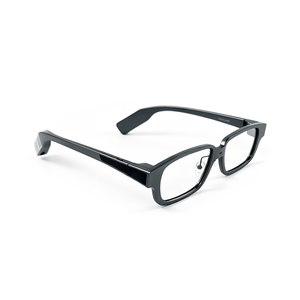
To ensure total reliability in international retail channels, our lightweight AI glasses undergo exhaustive physical, electrical, and optical validation. The frame structures are fabricated using ultra-flexible TR90 memory polymer coupled with aviation-grade titanium temples, keeping the total tare weight between 36g and 48g depending on lens and camera module selection.
Regulatory Compliance Benchmark Matrix
Every production lot shipped from our factory is backed by comprehensive EU Type-Examination Certificates issued by accredited Notified Bodies (NB), confirming full alignment with European safety standards.
Compliance Standard
Test Domain
Technical Benchmark & Threshold
Factory QC Standard
EN 300 328 (RED)
2.4GHz Wi-Fi / Bluetooth 5.3 RF
EIRP power < 10dBm, Spurious Emissions < -30dBm
100% Automated Wireless Tester Batch Scan
EN 62479 / EN 50663
Human SAR Exposure
Head SAR < 0.08 W/kg (Well below 2.0 W/kg EU Limit)
Simulated Tissue Dielectric Probing
EN 55032 / EN 55035
EMC & Immunity
Class B Radiated Emissions, ESD 8kV Air / 4kV Contact
Zero Heavy Metal Leaching, Phthalate-Free Frame Coatings
Cytotoxicity & Skin Sensitization Audits
Power management is a crucial factor in lightweight AI hardware. By incorporating custom anode-dense lithium polymer micro-batteries (ranging from 220mAh to 380mAh) directly within the ergonomic temples, our glasses maintain continuous voice interaction for up to 8 hours or recording video for 90 minutes. Thermal dissipation is achieved via layered graphite heat spreaders that prevent temple skin surface temperatures from exceeding 38°C, satisfying thermal comfort guidelines under IEC 62368-1.
B2B buyers and importers navigating the consumer electronics space must align their purchasing strategies with upcoming market developments. Intent mining across international hardware tenders reveals three primary macro-trends shaping smart glasses procurement:
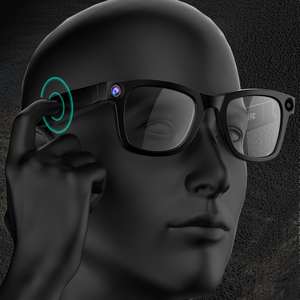
Multimodal Vision-Language Model Integration: Smart glasses are evolving from simple audio playback devices into real-time perceptual assistants. 2025/2026 models feature low-power 4K or 8MP point-of-view (POV) camera sensors capable of streaming frames directly to localized or cloud-hosted ChatGPT-4o, Gemini Live, or proprietary enterprise LLMs for instant text translation, scene analysis, and OCR contextual feedback.
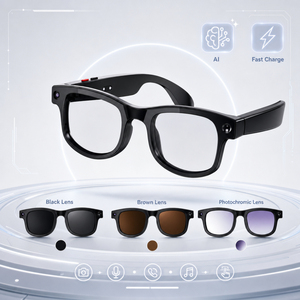
Adaptive Automatic Photochromic & Electrochromic Lenses: Consumer adoption hinges on versatility. Next-generation PC frames incorporate automatic photochromic tinting that transitions seamlessly from clear indoor optical lenses (Transmittance >90%) to dark outdoor sunglasses (Transmittance <15%) within 12 seconds under UV exposure.
Modular & Prescription-Ready Frame Engineering: Importers require hardware that supports prescription lens customization (Rx range -8.00D to +4.00D). Our OEM factory designs incorporate magnetic Rx wire-frames and quick-release lens groove geometries, allowing local opticians to fit prescription lenses without voiding the IP67 ingress protection rating.
Selecting an experienced AI glasses supplier and factory guarantees supply chain stability, consistent yield rates, and long-term hardware support. Operating out of a state-of-the-art 12,000m² manufacturing facility equipped with Class 10,000 dust-free optical cleanrooms, our engineering team manages the complete lifecycle from initial industrial design (ID) to final packaging.
Custom ID & Tooling
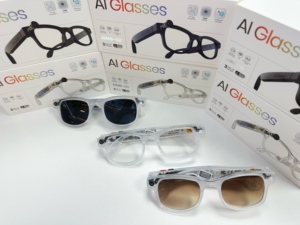
Full support for private mold development, frame coloration (matte black, tortoise shell, transparent gray), and laser-engraved brand logos.
Firmware & App White-Labeling
Custom Android/iOS SDK integration, customized BLE pairing names, voice assistant wake-word training, and private cloud server mapping.
Rigorous Reliability Testing
10,000-cycle temple hinge stress testing, 1.5-meter drop tests, IPX4 to IP67 salt spray corrosion testing, and thermal shock validation (-20°C to 65°C).
Frequently Asked B2B Procurement Questions
Essential insights for importers, distributors, and brand procurement managers.
What specific CE certifications do your AI smart glasses carry for European market entry?
Our entire product range holds authentic CE Radio Equipment Directive (RED 2014/53/EU) certificates issued by accredited notified bodies. This encompasses EN 300 328 for 2.4GHz RF emissions, EN 55032/EN 55035 for electromagnetic compatibility (EMC), EN 62479/EN 50663 for head SAR compliance, and RoHS 2.0 (2011/65/EU) material safety reports. Complete CE Declaration of Conformity (DoC) documents are supplied with every OEM shipment.
What is the typical Minimum Order Quantity (MOQ) for OEM/ODM brand customization?
For standard factory-ready models with custom logo silk-screening and personalized gift box packaging, our MOQ starts at 500 units. For full ODM projects involving custom frame tooling, specialized lens optics, custom firmware wake-words, or dedicated mobile application branding, our standard MOQ is 2,000 units with a prototyping timeline of 25 to 35 business days.
How do your lightweight AI glasses balance battery life without exceeding 50 grams?
We utilize high-energy-density anode lithium-polymer micro-batteries integrated symmetrically within both left and right temple arms. Combined with dynamic voltage scaling on our Bluetooth 5.3 low-power SoCs and ultra-efficient micro-optical displays, our glasses achieve 6 to 8 hours of audio/voice assistant usage or 90 minutes of continuous 4K video recording, while maintaining a ultra-light physical weight of under 42 grams.
Can your smart glasses integrate with custom private LLMs or enterprise software platforms?
Yes. We provide an open Android and iOS Bluetooth SDK that allows enterprise client teams to route voice streams, camera frame buffers, and button touch events directly to their proprietary cloud LLMs, warehouse management systems (WMS), or remote expert support platforms.
What quality control procedures are executed prior to factory dispatch?
Our factory follows a 100% 4-step quality verification process: Incoming Quality Control (IQC) on frame raw materials and chips; In-Process Quality Control (IPQC) during optical alignment; Automated Optical Inspection (AOI) and RF wireless tuning post-SMT assembly; and Final Quality Assurance (FQA) featuring 24-hour continuous burn-in testing and IP67 water immersion checks.
Partner with a Leading CE Certified AI Smart Glasses Manufacturer
Elevate your product portfolio with industry-leading lightweight AI eyewear. Contact our technical sales and engineering team today to receive detailed technical datasheets, factory compliance documentation, and wholesale OEM price schedules.