Featured OEM Smart Glasses Product Line
Engineered to international safety standards with turnkey custom branding, firmware SDK integration, and optical prescription flexibility for global enterprise importers and brand owners.

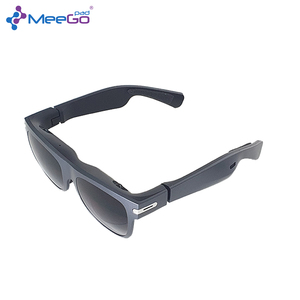
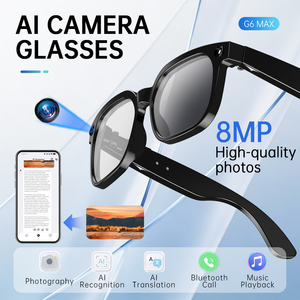
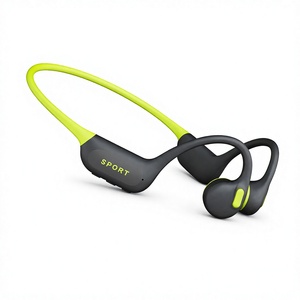
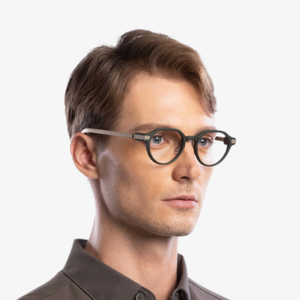

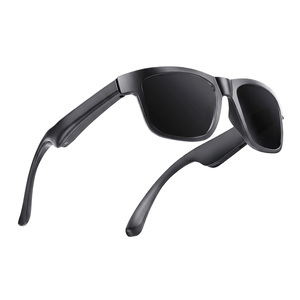
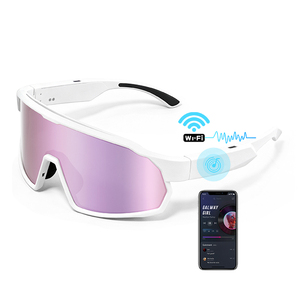
Technical Whitepaper: CE-Certified Smart Glasses OEM/ODM Sourcing Standards
The global smart eyewear trajectory has undergone a fundamental architectural shift. Wearable hardware has progressed beyond simple Bluetooth audio tethering into fully integrated multimodal artificial intelligence computing nodes. As a premier CE-certified OEM smart glasses manufacturer and global exporter, our engineering facilities bridge the gap between complex optical engine integration, edge-AI firmware deployment, and international regulatory compliance.
For B2B procurement directors, brand managers, and technology distributors entering European and North American retail markets, sourcing smart glasses requires stringent verification of European Conformity (CE) compliance under the Radio Equipment Directive (RED 2014/53/EU). Compliance extends far beyond cosmetic branding; it mandates documented Electromagnetic Compatibility (EMC EN 301 489), Specific Absorption Rate (SAR EN 50663) human safety thresholds, and RoHS 2011/65/EU hazardous substance restrictions.
Key Takeaway for B2B Procurement: Non-compliant wearable hardware subject to EU market surveillance risks immediate port seizure and recall. Our manufacturing pipelines provide complete technical construction files (TCF), EU Declarations of Conformity (DoC), and accredited ISO 17025 laboratory test reports for every OEM batch shipment.
Micro-Optical Engines & Waveguide Display Integration
At the center of next-generation AR display smart glasses lies the optical display module. Modern B2B sourcing strategies prioritize two primary optical display architectures: MicroLED with Diffraction Optical Waveguides and MicroOLED with Curved Birdbath Optics.
Diffractive optical waveguides offer an ultra-compact footprint with lens transparency exceeding 85%, allowing smart glasses to maintain the aesthetic outline of traditional luxury acetate or titanium frames. By projecting high-luminance green or full-color MicroLED visuals directly onto the diffractive grating, spatial navigation, AI real-time translation subtitles, and prompt telemetry can be superimposed into the user's direct line of sight without obscuring ambient environmental awareness.
Dual Engine AI Coprocessor
Integrated low-power System-on-Chip (SoC) architectures running local noise-cancellation algorithms while routing voice queries directly to Cloud LLMs (ChatGPT-4o, DeepSeek-V3) with under 600ms latency.
Vision Computer Cameras
High-resolution 12MP image sensors paired with custom ISP (Image Signal Processor) firmware engineered for real-time OCR text recognition, facial identity masking for privacy compliance, and 1080p POV video capture.
Directional Acoustic Beamforming
Open-ear dual micro-speakers utilizing inverse phase acoustic acoustic cancellation. Delivers high-fidelity stereo audio directly into the ear canal while suppressing sound leakage to under 3dB at 0.5 meters.
Future Procurement & Sourcing Trends (2025–2030)
As enterprise adoption of smart eyewear accelerates across industrial maintenance, healthcare telemetry, and consumer voice-AI markets, B2B buyers must align their supply chain orders with emerging engineering trends:
1. Multimodal Generative AI Edge Integration: Modern consumers expect AI smart glasses to "see what they see." Future-proof OEM contracts require camera optics capable of continuous frame analysis, context-aware visual query processing, and zero-touch multilingual translation.
2. Ergonomic Lightweighting & Thermal Dissipation: Frame weight remains the primary friction point for all-day wearability. Advanced OEM manufacturing leverages injection-molded TR90 memory polymers paired with anodized titanium temple hinges. High-density cobalt-lithium polymer batteries are embedded symmetrically inside the temples to achieve a perfect 50:50 front-to-back weight ratio under 40 grams.
3. Camera-Free Privacy Audio Variants: To capture privacy-restricted enterprise accounts (such as corporate boardrooms, educational institutions, and secure manufacturing facilities), leading brand portfolios include dedicated camera-free smart audio glasses utilizing identical frame molds.
Why Global Brands Select Our OEM Facilities
From initial CAD enclosure modeling and PCB SMT layout to Class 10,000 optical cleanroom assembly, our end-to-end manufacturing footprint guarantees scalable precision.
Rigorous Quality Engineering (IPQC/FQC)
Every batch of CE-certified smart glasses undergoes 100% automated optical alignment testing, IPX4 to IPX8 waterproof pressure chamber immersion, acoustic spectrum analysis, and drop/vibration stress verification.
Custom Firmware & App Ecosystems
We provide full white-label companion mobile applications for iOS and Android, customized Bluetooth pairing pop-ups, over-the-air (OTA) firmware upgrade servers, and open API hooks for enterprise software integration.
Optical Prescription Compatibility
Our frame housings feature magnetic snap-on lens rings and universal groove channels engineered to fit standard single-vision, progressive, anti-blue ray, and prescription sun lenses from global optical labs.
Frequently Asked Questions for B2B Smart Glasses Sourcing
What specific certifications are required to import OEM smart glasses into the European Union?
What customization options are available under your OEM/ODM program?
How do you handle battery safety, international shipping, and UN38.3 transport certification?
What is the typical Minimum Order Quantity (MOQ) and production lead time for OEM orders?
How is privacy addressed on smart glasses models featuring integrated cameras?
Can your smart glasses integrate directly with third-party Large Language Models (LLMs) such as ChatGPT or DeepSeek?
Partner with a Leading CE Certified OEM Smart Glasses Manufacturer
Elevate your product portfolio with industry-leading AI AR eyewear technology. Contact our engineering and export team today to request samples, technical specifications, and factory-direct OEM pricing.
Inquire Now