Industrial & Enterprise Smart Vision Eyewear Catalog
High-precision smart glasses engineered for real-time video capture, AI speech translation, open-ear acoustic fidelity, and hands-free computer vision deployment.
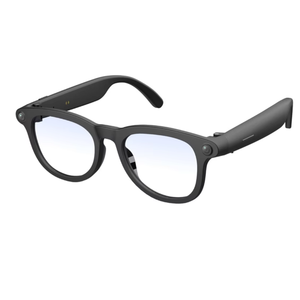
AI SG70 Smart Glasses with Camera & Video Recording-Touchscreen & App Control Rechargeable Battery for Translating Meeting Notes
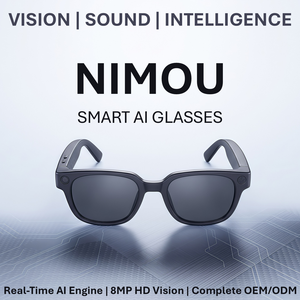
Business Smart AI Glasses Audio Eyewear Video Sunglasses with 8MP Camera Translation Call
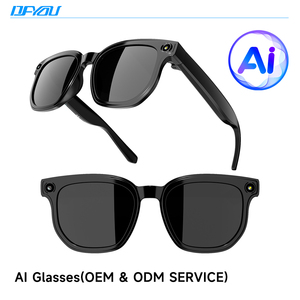
Reading Smart Ai Glasses Bone Conduction with Camera Strong Sound Quality and Ai and Prescription Lens Ai Smart Glasses for Men
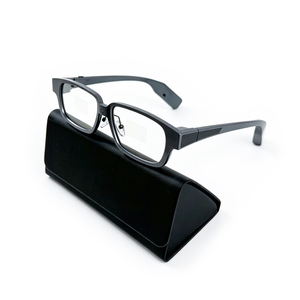
AI Glasses Teleprompter Real-Time Translation Voice Assistant Lightweight Smart Glasses for Business Work
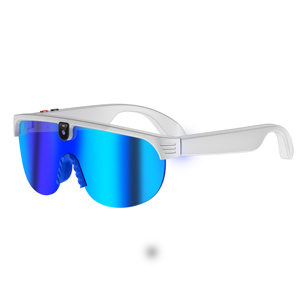
Factory Oem 4K Sunglasses Smart Camera Audio Video DV Glasses SportsSports Glasses Camera Polarized Sunglassesrecorder Glasses
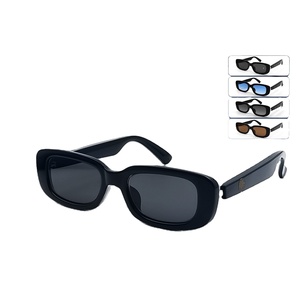
Custom Accaptable New Smart Glasses Driving Polarized Sunglasses Wireless Earphone Music Glasses with Microphone

For INMO GO3 Real-time Translation AR Smart AI Glasses with Photo/Video/Audio/Speech Identification and XR Technology
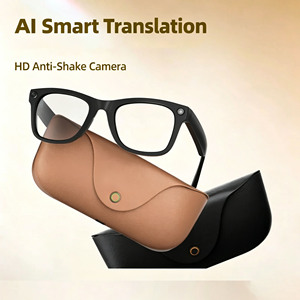
AI Smart Glasses 8MP Camera Real-Time Translation for 5.3 Open Ear Speakers Voice Control UV400 Polarized Light Weight
Leading Precision Optical & AI Hardware OEM Manufacturing
Empowering global tech brands, tier-1 distributors, enterprise software vendors, and retail chains with end-to-end custom computer vision hardware development.
Edge Computer Vision & ISP
Integration of low-power image signal processors (ISPs) paired with high-resolution CMOS camera sensors for real-time visual recognition, OCR scanning, and spatial mapping.
- Custom 4K & 8MP sensor module integration
- Zero-latency local object frame analytics
- HDR low-light capture optimisation
Optical Active Alignment (AA)
Automated cleanroom assembly ensuring sub-micron alignment between micro-display optical waveguides, lens stacks, and camera sensor planes to prevent optical tilt distortion.
- Sub-micron spatial accuracy (6-DoF AA)
- Anti-fog, IP67 dust/waterproof sealing
- Custom UV400 & prescription lens bonding
Acoustic & Wireless Stack
Directional open-ear speaker cavities combined with dual-beamforming noise-canceling microphones to capture pristine voice prompts for multimodal LLM processing.
- ENC dual-microphone voice isolate
- Bluetooth 5.3 & Ultra-Low Power Wi-Fi
- Private sound field leakage suppression
Industrial White Paper: B2B OEM Procurement & Manufacturing Architecture of Computer Vision Glasses
The rapid convergence of multimodal Large Language Models (LLMs), edge image processing, and micro-optics has catapulted **custom OEM computer vision glasses** from niche prototypes to indispensable enterprise tools. Global tech enterprises, logistics providers, medical equipment firms, and consumer electronics brands are increasingly turning to specialized **OEM computer vision glasses manufacturers and factories** to deliver lightweight, battery-efficient, and computationally robust smart eyewear. This white paper examines the technological trajectory, core enterprise OEM capabilities, supply chain manufacturing considerations, and future strategic procurement trends governing the smart eyewear ecosystem.
Executive Summary for Procurement Officers & Product Managers: Computer vision glasses combine real-time visual intake (CMOS camera systems), acoustic intelligence (beamforming mics & open-ear audio), and cloud/edge processing. OEM procurement success requires evaluating factories not merely on frame assembly, but on Active Alignment (AA) optical tolerance, thermal dissipation engineering in TR90/Titanium chassis, RF antenna tuning, and custom SDK firmware integration.
Key Technological Development Trends in AI Vision Eyewear
The smart eyewear market is experiencing a profound paradigm shift. Historically limited to rudimentary Bluetooth audio streaming or standalone point-of-view action recorders, modern vision AI glasses integrate deep spatial awareness and generative intelligence. Key engineering trends reshaping factory production include:
1. On-Device Edge AI & Ultra-Low Power Image Signal Processors (ISPs)
To maintain all-day wearability under 50 grams, power consumption must remain below critical thermal thresholds. Modern OEM factories incorporate specialized low-power ISPs capable of executing motion detection, scene segmentation, and spatial landmark extraction directly on-chip before offloading high-dimensional data to companion mobile apps or cloud APIs. This hybrid edge-cloud workflow minimises latency while dramatically preserving battery life.
2. Multimodal LLM & Context-Aware Vision Processing
With the integration of multimodal vision AI engines, users no longer simply take photos—they converse with their surrounding environment. By capturing high-definition frame sequences via an 8MP or 4K ultra-wide camera module, smart glasses translate real-time text (menus, street signs, industrial manuals), recognize complex machinery components, facilitate hands-free remote assistance for field engineers, and generate automated meeting summaries.
3. Advanced Waveguide & Micro-Display Optical Integration
While camera-only and audio-focused models dominate high-volume consumer sales due to lightweight ergonomics, enterprise-grade AR vision glasses are rapidly adopting diffractive optical waveguides paired with Micro-OLED or Micro-LED engines. Factories equipped with Class 100 dust-free cleanrooms utilize 6-Axis Active Alignment robotics to position display engines relative to optical waveguides, delivering crisp visual teleprompter overlay, navigation prompts, and contextual workflow checklists.
4. Privacy-By-Design & Hardware LED Indicators
As global regulations regarding visual capture and GDPR compliance tighten, custom OEM manufacturing incorporates physical hardware indicators. Front-facing LED tally lights are hardwired directly into the camera power circuit, ensuring that whenever the sensor receives power, a distinct indicator illuminates. This physical security feature prevents unauthorized software manipulation and builds consumer trust in public and workplace environments.
Future Procurement Trends for Global B2B Buyers (2025–2030)
Procurement directors and product line managers analyzing the smart eyewear market must navigate changing consumer expectations and corporate compliance demands. Strategic procurement trajectories indicate several clear shifts:
| Procurement Vector | Legacy Action/Audio Glasses | Next-Gen OEM Computer Vision Glasses | Strategic Enterprise Value |
|---|---|---|---|
| Core Processing | Basic MCU / Bluetooth Audio SoC | Multi-Core SoC + Dedicated AI Vision NPU | Real-time image translation, object tagging, AI speech assistants |
| Optical Assembly | Manual lens snapping into plastic frame | 6-DoF Cleanroom Active Alignment (AA) | Eliminates image distortion, lens tilt, and optical parallax errors |
| Camera Architecture | 1080p fixed focus video recorder | 8MP/4K ISP with HDR & Hardware Encryption | Superior image capture, facial/text OCR accuracy, privacy compliance |
| Acoustic Setup | Single mic, standard speaker driver | Dual-Mic ENC Beamforming + Open-Ear Directional | Crystal-clear voice input for AI prompts & ambient noise rejection |
| Customization Scope | Logo print on temple arm | Full OEM/ODM: Firmware SDK, Frame Moulding, PCB Layout | White-label brand differentiation, private cloud API binding |
1. Shift Toward Modular OEM Platforms
Brands no longer want to build smart glasses from scratch due to prohibitive NPI (New Product Introduction) engineering costs. Leading factories offer pre-certified, modular motherboard platforms ("SoM" - System on Module) containing the RF circuit, battery management system (BMS), audio codecs, and ISP. Brands customize the outer frame geometry, lens tint (polarized UV400, photochromic, or prescription), and companion app branding, drastically reducing time-to-market from 18 months to under 5 months.
2. Demand for Bifurcated Product Lines (Camera vs. Audio-Only)
Enterprise buyers are increasingly procuring dual-tier product portfolios. For field service technicians, travel creators, and security inspectors, camera-enabled vision models are deployed. Conversely, for office productivity, indoor corporate environments, and privacy-sensitive sectors (such as healthcare and high-tech manufacturing floors), buyers order camera-free AI audio glasses. Partnering with a factory that manufactures both variants on unified tooling platforms minimizes inventory costs and unifies app maintenance.
3. Enterprise SDK & White-Label API Integration
Hardware alone is insufficient without seamless software integration. Buyers prioritize OEM factories that deliver robust Android/iOS companion SDKs, open BLE protocol documentation, and cloud API hooks. This empowers enterprise clients to route captured photos, audio streams, and user prompts to their proprietary enterprise AI servers or custom LLM infrastructure securely.
Enterprise Factory Capabilities & OEM/ODM Advantage
Our manufacturing infrastructure is purpose-built to bridged the gap between optical engineering and complex smart wearable assembly. By controlling every stage of the manufacturing matrix, we guarantee tier-1 quality, strict IP protection, and scalable volume throughput.
End-to-End In-House Manufacturing Workflow:
- Tooling & Ergonomic Design: 3D CAD modeling, high-precision injection molding using ultra-lightweight EMS TR90, aircraft-grade titanium alloy, and hypoallergenic acetate frame materials.
- SMT Electronics Assembly: High-speed Surface Mount Technology (SMT) lines producing multi-layer rigid-flex printed circuit boards (PCBs) customized for temple arm contours.
- Micro-Acoustic Calibration: Anechoic chamber testing for open-ear directional sound performance, minimizing outward sound leakage while maximizing bass response and clarity.
- RF & Antenna Optimization: Comprehensive OTA (Over-The-Air) testing chambers verifying Bluetooth 5.3 and Wi-Fi antenna efficiency across diverse head geometries.
- Quality Assurance & Reliability Testing: Rigorous environmental testing including IP67 water/dust ingress verification, 1.5-meter drop tests, hinge fatigue cycling (over 20,000 flexes), thermal cycling (-20°C to 65°C), and sweat resistance tests.
By partnering directly with an experienced manufacturing plant, clients bypass intermediary trading margins, gain direct engineering access for custom firmware feature requests, and secure robust supply chain guarantees backed by international quality management standards (ISO9001, ISO14001, BSCI, CE, FCC, RoHS, REACH).
Frequently Asked Questions for OEM Buyers
Answers to common operational, technical, and regulatory questions from enterprise procurement teams and brand partners.
Our custom OEM computer vision glasses combine high-resolution CMOS cameras (8MP to 4K), open-ear directional audio speakers, dual noise-canceling microphones, and low-power ISP processors. They enable real-time visual recognition, hands-free video recording, live speech translation, optical character recognition (OCR), voice-activated AI assistant queries, and Bluetooth telephony in lightweight, everyday eyewear form factors.
Yes. We offer modular hardware platforms allowing buyers to select camera-free smart audio models. These variants maintain voice assistant access, open-ear acoustic playback, touch control, and Bluetooth calling while removing the optical camera module—making them compliant with office, educational, and secure industrial environments.
We support extensive customization, including frame aesthetic design (TR90, acetate, metal titanium), lens types (polarized, UV400, photochromic, anti-blue light, prescription lens adaptation), custom silk-screen branding, white-label mobile companion app skinning, custom firmware boot screens, tailored Bluetooth device naming, and bespoke packaging solutions.
We employ 6-Axis Active Alignment (AA) automated robotics within dust-free cleanrooms to position camera sensors relative to frame optical axes. Additionally, our firmware integrates electronic image stabilization (EIS) algorithms to ensure smooth first-person video acquisition during walking or motion activities.
Our manufacturing processes and finished products comply with global regulatory standards. We provide complete testing documentation for CE, FCC, RoHS, REACH, UN38.3 (battery transport safety), MSDS, and IP67 dust/water ingress standards, facilitating seamless customs clearance for global markets.
For standard OEM customization on existing platform toolings (custom logo, packaging, software configuration, colorways), lead times range between 3 to 5 weeks. For full ODM engineering projects involving custom frame molding, custom PCB layout, and optical design, mass production delivery is typically achieved within 12 to 16 weeks.
Partner with a Leading Computer Vision Eyewear OEM Factory
Ready to launch your brand's next-generation AI vision smart glasses? Contact our technical engineering team for BOM estimates, OEM sample evaluation, and turnkey manufacturing support.
Send an Inquiry