Featured Smart Eyewear Portfolio
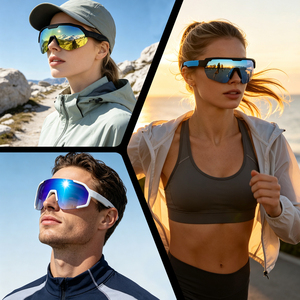
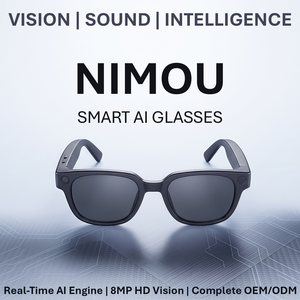
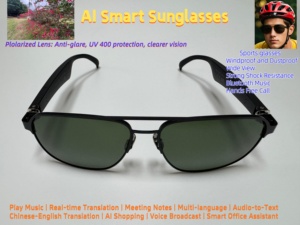
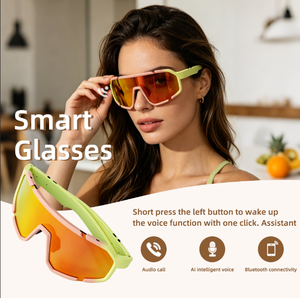
Explore our enterprise-grade OEM/ODM smart eyewear platforms engineered for voice assistance, open-ear audio, HD video capture, and real-time translation.

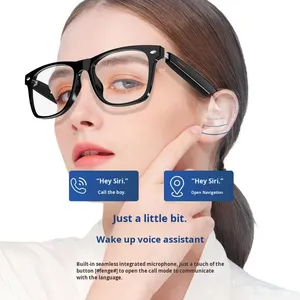
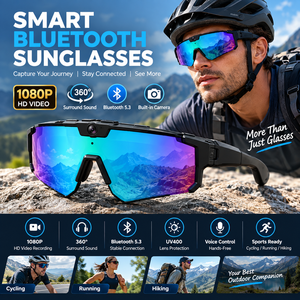
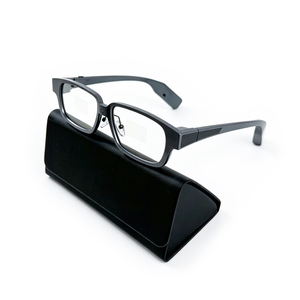
Industrial Manufacturing Capabilities & Benchmark Standards
Combining high-precision optoelectronics with edge computing to redefine spatial computing hardware.
Engineering Architecture of Modern AI-Powered Eyewear
A comprehensive breakdown of how smart frames integrate acoustic engineering, optical engines, neural processing units (NPU), and power management systems into daily-wear form factors.
1. System-on-Chip (SoC) & Edge Neural Processing
As a leading OEM/ODM AI smart glasses manufacturer, our hardware architecture revolves around ultra-low-power, multi-core chipset platforms (including Qualcomm Snapdragon Wear, Realtek, and Nordic BLE 5.4 chips). Modern AI eyewear demands real-time processing of multimodal inputs—audio streams, computer vision data, and sensor telemetry—without sacrificing battery thermal dissipation.
Our engineering team integrates specialized micro-NPUs capable of running tinyML models locally on the edge. This enables instant wake-word verification, dynamic directional beamforming for dual-microphone noise cancellation, and local sensor fusion (6-axis IMU tracking) while keeping standby power consumption under micro-amp thresholds.
OEM Advantage: We provide customizable firmware stacks supporting direct REST/WebSocket API endpoints to OpenAI ChatGPT, Claude 3.5, Google Gemini, and custom enterprise LLMs via iOS/Android companion software.
2. Micro-Acoustics & Directional Open-Ear Sound Field
The primary user barrier in consumer smart audio glasses has historically been audio leakage and lack of bass response. Our proprietary Open-Ear Acoustic Cavity Architecture solves this through destructive phase cancellation technology. Twin dual-driver micro-speakers positioned precisely above the acoustic tragus project sound directly into the ear canal while generating counter-phase soundwaves outward to neutralize sound dispersion.
- Dual MEMS Microphones: Environmental Noise Cancellation (ENC) filters out background wind noise up to 35dB during phone calls or speech recognition.
- Custom Equalizer Tuning: Firmware-level DSP tuning for localized voice clarity, acoustic isolation, and HD audio codecs (AAC, SBC, LC3).
- Privacy Protection Mode: Automatic gain control ensures confidential business phone calls remain completely unheard by bystanders within a 0.5-meter radius.
3. First-Person View (POV) Camera Engine & Vision AI
For smart video glasses and AI vision assistants, hardware integration requires millimeter-accurate placement of ultra-compact CMOS camera sensors (up to 8MP / 1080P 30fps) within the front frame chassis. Our structural tooling ensures zero impact on frame balance while preventing thermal throttling during continuous recording or AI object identification.
Integrated vision AI models allow users to capture first-person point-of-view photos, scan optical text for instant voice translation, teleprompter HUD overlaying, and real-time visual assistance for visual impairment or field work inspections.
Global Smart Eyewear Procurement & Future Market Trends
Key industry shifts driving enterprise purchasing decisions, consumer adoption, and private-label customization over the next decade.
1. Multimodal Conversational AI Integration
Future smart glasses are transitioning from simple Bluetooth accessories to standalone spatial AI interfaces. OEM buyers are increasingly prioritizing hardware platforms that support hands-free voice interaction, visual context analysis, and ambient artificial intelligence.
2. Prescription-First Ergonomic Designs
Consumers demand smart eyewear that functions seamlessly as everyday corrective glasses. Manufacturing developments focus on TR90 memory plastics, aerospace grade titanium hinges, and hot-swappable prescription lens frames (Anti-Blue Ray, Photochromic, Polarized UV400).
3. Extended Battery Life & Magnetic Docking
With high-density dual-cell lithium batteries integrated inside the temple arms (up to 220mAh total), modern AI glasses offer 6 to 10 hours of active audio playback. Integrated magnetic fast-charging charging cases extend battery life to 36+ hours of operational readiness.
Why Partner With Us: Complete Turnkey OEM/ODM Value Chain
From conceptual Industrial Design (ID) to mass production SMT and international compliance certification.
Custom Industrial & Mechanical Design (ID/MD)
We offer tailor-made frame designs, bridge dimensions, temple thickness, and weight distribution optimization. Our 3D printing rapid prototyping allows physical sample validation in as fast as 7 business days.
Firmware White-Labeling & Mobile SDK
Deploy smart eyewear under your own corporate brand. We supply customizable iOS & Android SDKs, white-label Bluetooth pairing popups, and branded OTA (Over-The-Air) firmware update servers.
Rigorous Reliability & Regulatory Testing
All mass production units undergo drop testing, hinge flex endurance tests (10,000+ bends), salt spray corrosion tests, thermal shock chamber testing, and IP67 dust/water resistance validation. Fully certified for CE, FCC, RoHS, REACH, and FDA Class I.
Frequently Asked Questions (B2B Procurement FAQ)
Technical, logistical, and commercial answers for brand owners, distributors, and enterprise buyers.
What is the minimum order quantity (MOQ) for custom OEM/ODM orders?
For standard ready-to-ship neutral smart glasses models, our minimum order quantity starts at 50 to 100 units. For customized branding (laser-engraved logo, customized packaging, firmware Bluetooth naming), MOQ is typically 500 units. Full ODM projects requiring custom optical tooling and plastic injection molds start at 2,000 units.
Can prescription (Rx) lenses be fitted into your AI smart glasses frames?
Yes! All our smart eyewear frame platforms are designed with optical rim dimensions compatible with standard prescription lens cutting. Opticians can easily fit single-vision, progressive, anti-blue light, or photochromic lenses into the frames without damaging internal flex PCBs or touch sensors.
How does the AI Voice Assistant integration work on the software level?
Our smart frames communicate via Bluetooth 5.4 to our proprietary companion mobile application or your own white-labeled app. The app acts as a gateway bridge, passing encrypted audio prompts to dynamic LLM cloud services (such as OpenAI ChatGPT, Microsoft Azure AI, or Google Cloud Speech-to-Text) and instantly streaming audio responses back to the glasses with sub-second latency.
What certifications do your smart eyewear products carry for overseas distribution?
Our manufacturing facilities are ISO9001 and BSCI certified. All product models comply with international regulatory standards, holding CE, FCC, RoHS, REACH, TELEC, and UN38.3 (battery transport safety) documentation. We also assist partners in obtaining localized market compliance certifications upon request.
What is the typical development timeline for a new ODM smart eyewear project?
A standard ODM project timeline spans approximately 60 to 90 days: Concept ID/MD Design (1-2 weeks), Functional Prototype & 3D Sample (2 weeks), Plastic Mold Tooling (4 weeks), SMT Circuit Board Engineering & Firmware Integration (2 weeks), Pilot Run & Reliability Testing (2 weeks). Mass production lead time thereafter is 25-30 days.
Ready to Launch Your Custom Smart AI Eyewear Line?
Contact our optical engineering and sales leadership team today to request samples, technical specifications, and factory direct volume pricing.