Enterprise AR & AI Smart Eyewear Portfolio
Explore our flagship OEM/ODM wearable architectures, ranging from sub-50g AI voice assistants to full-color diffractive waveguide optical displays.

Smart AI AR Glasses 12MP Camera IPX4 Waterproof Dual Camera AI Assistant ChatGPT Super Light for Outdoor Shooting Business
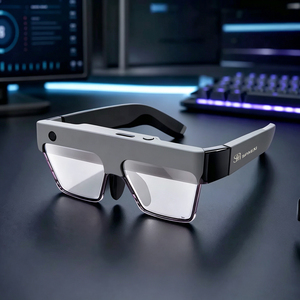
2026 New Wireless AR Glasses Standalone 4G Android with Camera Wearable Display for Work Travel Enterprise for any device
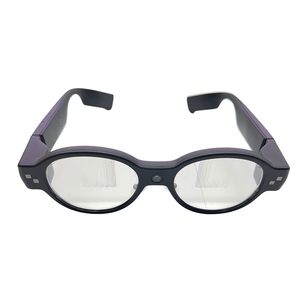
Next Generation Smart Glasses AI AR Wireless Standalone Translation Assistant Privacy Screen Business Productivity
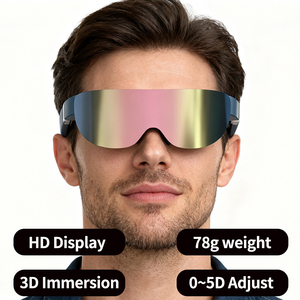
Oem Ar Smart Glasses With Full Color Display & No Camera In-Depth Review Ready Sleek Privacy-Focused Ar Eyewear for Enterprise
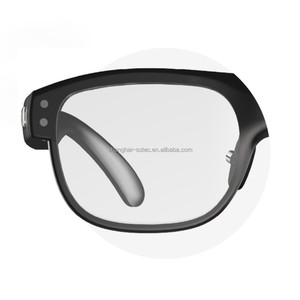
AI Glasses Real-Time Captioning Micro-Led AR Hardware 2500 Nits Brightness for Business Education Global Travelers Recording
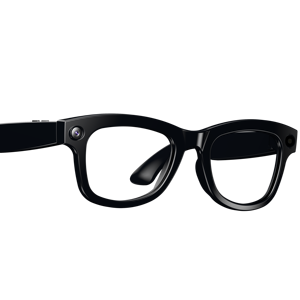
Multilingual Smart Glasses AR Hands-Free Translation for Business/Travel, 12 Languages Realtime Display, HD Camera Voice Control
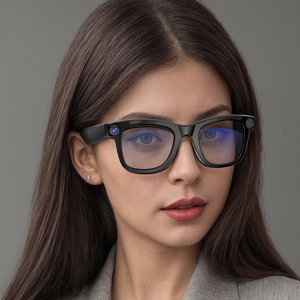
OEM/ODM Wireless AR Glasses 3D Image Recognition AI-Powered Smart Eyewear with Real-Time Assist Daily/Travel/Business Use
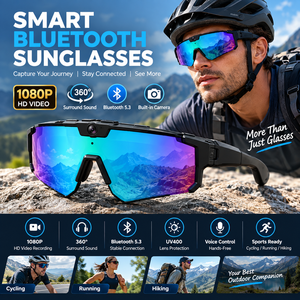
Smart Sunglasses with HD Camera 1080P Video Recording 360° Surround Sound Sports Eyewear for Cycling Running Hiking
1. The Enterprise Spatial Computing Paradigm: OEM/ODM Strategic Imperatives
The global wearable technology ecosystem is undergoing a fundamental structural transition. The historical boundary separating basic consumer audio eyewear from complex augmented reality (AR) head-mounted displays has dissolved. Modern enterprise procurement teams, hardware distributors, and tech brand owners no longer seek simple peripheral accessories; they require integrated spatial computing platforms capable of contextual awareness, real-time computer vision, and zero-latency human-computer interaction (HCI).
As a specialized OEM/ODM Enterprise AR Glasses Factory & Supplier, our engineering architecture is designed from the silicon up to solve the three primary bottlenecks of wearable AR: thermal dissipation envelopes, optical light guide efficiency, and multi-modal AI latency. Enterprise procurement officers evaluating smart eyewear vendors must assess capabilities beyond basic assembly—focusing instead on precision optical integration, custom printed circuit board assembly (PCBA) miniaturization, and deep firmware customization.
Information Gain Insight: The next decade of enterprise productivity will not be driven by handheld touchscreens, but by heads-up, hands-free spatial interfaces. Custom OEM/ODM hardware enables enterprises to lock in proprietary form factors, tailored optical engines (Micro-LED vs. Micro-OLED), and closed-loop data security protocols before mass consumer adoption reaches saturation.
Why OEM/ODM Co-Development Superiority Matters
Off-the-shelf consumer AR glasses consistently fail in high-rigor corporate environments due to fixed firmware restrictions, uncalibrated optical engines, short battery cycles, and privacy compliance violations (e.g., unauthorized camera hardware in classified industrial sectors). Our dedicated Original Design Manufacturing (ODM) framework empowers enterprise clients to configure:
- Privacy-Compliant Hardware Variants: Camera-free optical waveguide configurations for sensitive manufacturing cleanrooms, defense applications, and healthcare environments.
- High-Luminance Optical Engines: Diffractive optical waveguided displays exceeding 2,500 nits, ensuring complete outdoor readability under direct sunlight.
- Custom Sensor Fusion: Modular integration of 9-axis IMUs, dual 12MP POV cameras, ambient light sensors, and time-of-flight (ToF) depth mappers.
- Tailored Android & Linux OS Stacks: Custom ROM building with pre-loaded Enterprise Mobility Management (EMM/MDM), locked-down kiosk modes, and native REST API bridge hooks for local Large Language Model (LLM) execution.
Enterprise Manufacturing & R&D Core Architecture
Our ISO9001-certified manufacturing ecosystem combines optical cleanroom assembly with automated SMT production lines.
Diffractive Waveguide Optics
Precision nano-imprint lithography creating surface relief grating (SRG) waveguides. Delivers 85%+ optical transparency, high contrast ratios, and zero visual distortion for comfortable all-day wear.
Micro-LED & Micro-OLED Engines
State-of-the-art micro-display engines offering pixel densities exceeding 3000 PPI. Engineered for sub-milliwatt power draw while maintaining ultra-bright projection for indoor and outdoor industrial utility.
On-Device Multimodal AI
Embedded Edge AI processing capable of low-latency voice intent processing, real-time optical character recognition (OCR), 12+ language translation, and multi-modal ChatGPT / Claude API integration.
2. Technological Vectors & Procurement Trends Driving the AR Eyewear Industry
Procurement directors and product managers must align their 3-to-5-year hardware roadmaps with underlying technological shifts. Based on empirical production metrics and global enterprise deployment data, four key hardware vectors define the market through 2030:
Vector A: Display & Optical Waveguide Evolution
Traditional bulky optical setups like BirdBath and freeform prisms are rapidly being phased out in favor of optical waveguides. Surface Relief Waveguides (SRG) and Volume Holographic Waveguides (VHG) represent the gold standard for enterprise AR. By reflecting light internally through a microscopic glass substrate less than 1.5mm thick, optical waveguides allow smart glasses to retain the sleek profile of everyday eyewear while projecting high-definition visual overlays.
Vector B: Edge AI Acceleration & Latency Reduction
The integration of Generative AI into wearable hardware requires localized edge processing. Future enterprise procurement heavily favors dual-chip system architectures: a main SoC handling system tasks and a dedicated neural processing unit (NPU) managing low-latency audio beamforming, 3D SLAM tracking, and real-time vision parsing. Keeping motion-to-photon latency below 15 milliseconds is critical to preventing operator eye strain and simulator sickness during long work shifts.
Vector C: Micro-Battery Metallurgy & Thermal Envelopes
Battery energy density remains a core metric for enterprise decision-makers. Traditional lithium-ion batteries are giving way to high-density silicon-anode micro-batteries integrated seamlessly into the frame temples. Combined with intelligent power management units (PMUs) and passive graphite heat distribution plates, our custom OEM frames maintain a surface operating temperature below 37°C while supporting continuous 4G/Wi-Fi operation.
Vector D: Modular Security & Data Governance Compliance
Corporate espionage and stringent privacy laws (such as GDPR and HIPAA) have transformed how enterprise buyers evaluate AR hardware. OEM solutions must support hardware-level camera disablement switches, encrypted memory storage, and customizable Bluetooth protocol stacks to prevent data leakage during field operations.
3. OEM/ODM Customization Matrix: From Concept to Mass Production
As a primary manufacturing supplier, our factory provides end-to-end original design engineering. We bridge the gap between initial optical concept designs and high-yield automated mass production.
Structural & Frame Customization
- Materials: Ultra-lightweight Swiss Grilamid TR90, aviation-grade titanium alloys, and high-strength carbon-fiber composites.
- Ergonomics: Multi-axis adjustable silicone nose pads and flexible spring hinges engineered for global head shape fitment.
- IP Ratings: Ingress protection ranging from IPX4 splash resistance to IP67 dust/waterproof sealing for outdoor industrial work.
- Prescription Lenses: Magnetic frame clip-ons and direct optical Rx lens cutting services.
Electronic & Firmware Engineering
- Audio Architecture: Open-ear directional acoustic speakers with dual-microphone active noise cancellation (ANC) and spatial voice isolation.
- Camera Systems: 1080P HD to 12MP high-speed Sony sensors with hardware image stabilization (EIS) for crisp POV recording.
- Connectivity: Integrated 4G LTE standalone SIM modules, Wi-Fi 6, Bluetooth 5.3, and ultra-wideband (UWB) tracking chips.
- SDK & Middleware: OpenXR, Android Studio, and Unity/Unreal Engine SDK support with direct firmware flashing capabilities.
Factory Qualification Standard: Every batch of smart glasses manufactured in our cleanrooms undergoes rigorous stress testing: 10,000-cycle temple hinge flex tests, 1.5-meter drop impacts, high-humidity thermal cycling (-20°C to 65°C), and 100% optical alignment verification using automated spectrophotometers.
4. Enterprise B2B Procurement FAQ
Key technical, operational, and commercial questions answered by our engineering team for global buyers, distributors, and system integrators.
What is the typical Minimum Order Quantity (MOQ) for custom OEM/ODM projects?
For standard logo customization and packaging modifications on ready-to-ship architectures, our MOQ starts at 200 units. For full ODM hardware projects—including custom frame tooling, specialized optical waveguides, and custom PCBA layout design—the baseline MOQ starts at 1,000 to 3,000 units depending on technical complexity.
How does your factory address bystander privacy concerns regarding built-in cameras?
We offer two distinct hardware engineering solutions. First, we manufacture completely camera-free AR models (such as our privacy-focused visual display glasses) for restricted corporate environments. Second, for camera-equipped models, we integrate hardware-level LED recording indicator lights directly wired to the camera sensor circuit, ensuring visual notice whenever recording is active.
Can your AR smart glasses operate offline without an active internet connection?
Yes. Our engineering team can flash customized offline firmware stacks. Local voice command recognition, offline text-to-speech engine execution, offline OCR parsing, and local Bluetooth sensor data collection can all be performed on-device without transmitting data to external cloud servers.
What optical certifications and safety standards do your factory products meet?
All our AR glasses and smart eyewear products comply with international safety and quality standards, including CE, FCC, RoHS, REACH, and UN38.3 (for lithium battery air transport). Lenses are tested for UV400 protection and EN166 industrial impact resistance where required.
How long does the NPI (New Product Introduction) engineering cycle take for ODM projects?
A typical ODM development lifecycle spans 12 to 16 weeks: 3 weeks for industrial design (ID) and mechanical engineering (MD) freeze; 4 weeks for rapid tooling and PCBA prototyping; 3 weeks for EVT (Engineering Validation Test) and optical tuning; and 4 weeks for DVT (Design Validation Test) and mass production ramp-up.
Do you support custom software integration for third-party enterprise platforms?
Absolutely. We provide full Android/Linux SDKs, detailed API documentation, and sample code for Bluetooth communication, audio streaming, camera video stream capture, and optical display rendering. Our software support team works directly with your developers to ensure seamless software integration.
Start Your Custom AR Glasses Hardware Project
Partner with a leading OEM/ODM enterprise factory. Speak directly with our optical engineers, hardware architects, and international supply chain managers to receive custom technical specs, sample evaluation kits, and volume pricing quotes.
Inquire Now