Next-Generation Smart & AR Eyewear Portfolio
Explore our ODM/OEM ready wearable platforms incorporating advanced diffraction optics, MicroLED display engines, real-time AI translation, and open-ear audio architecture.
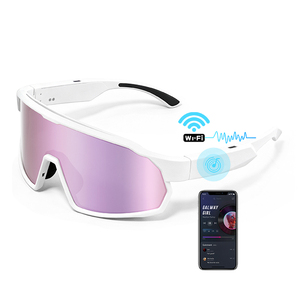
Manufacturer Custom AI Intelligence Sports Sunglasses Calling Music Cycling Glasses 4-hour Life Battery Smart Goggles
Inquire for OEM Specs
AI Translation Smart Glasses with Real-Time Translation in 100+ Languages, Hands-Free Calls & Music Streaming
Inquire for OEM Specs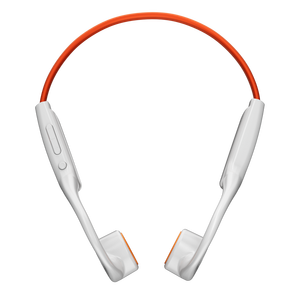
Bone Conduction Neckband Sports Wireless Stereo Earphones Open Ear LED IPX-5 Waterproof for V5.4 5-10 Hours Playtime
Inquire for OEM Specs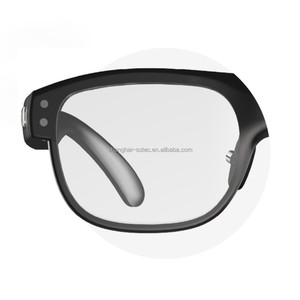
AI Glasses Real-Time Captioning Micro-Led AR Hardware 2500 Nits Brightness for Business Education Global Travelers Recording
Inquire for OEM Specs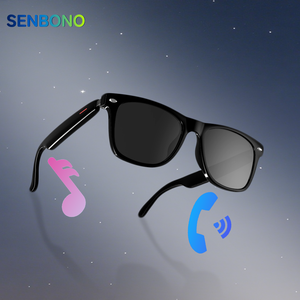
SENBONO E13 Smart Glasses Wireless For Hands-free Call Music Noise Reduction Voice Assistant Outdoor Sports Glasses IPX-6
Inquire for OEM Specs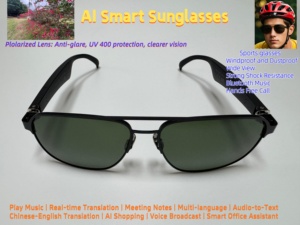
New AI Smart Glasses Outdoor with UV400 Protection PC Lenses Hands-Free Music & Bluetooth Call Features Sports Style for Men
Inquire for OEM Specs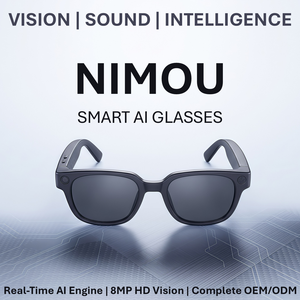
Business Smart AI Glasses Audio Eyewear Video Sunglasses with 8MP Camera Translation Call
Inquire for OEM Specs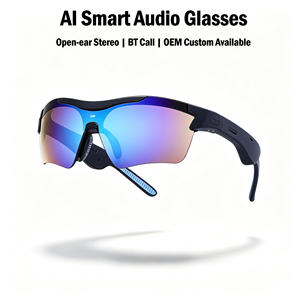
AI Smart Audio Glasses for 5.4 Type-C Charging Open Ear Hands-free Call UV Protection Lightweight Sunglasses OEM ODM Smart
Inquire for OEM SpecsHigh-Yield Waveguide & Smart Hardware Manufacturing
Providing global tech brands, distributors, and enterprise integrators with scalable optical assembly, customized cleanroom processing, and end-to-end hardware architecture.
Selecting the Right Optical Waveguide Architecture for OEM/ODM Procurement
An authoritative technical evaluation of Surface Relief Grating (SRG), Volume Holographic Grating (VHG), and Geometric Reflective optics for commercial AR eyewear production.
1. Paradigm Shift in Near-Eye Display Technology
In the landscape of Augmented Reality (AR) and Spatial Computing, traditional free-form prism and birdbath optical engines are rapidly giving way to Optical Waveguide Systems. As enterprise buyers and brand owners evaluate contract manufacturers, understanding the physics, optical efficiency, and mass-producibility of waveguide substrates is critical for product positioning.
Optical waveguides utilize total internal reflection (TIR) within a thin glass or polymer wafer (typically 0.5mm to 1.1mm thick) to guide light emitted from a micro-display engine—such as MicroLED, MicroOLED, or Digital Light Processing (DLP)—into the human pupil. This eliminates bulky forward projection elements, creating smart eyewear that mirrors standard corrective or sunglass frame aesthetics.
| Optical Architecture | Surface Relief Grating (SRG) | Volume Holographic Grating (VHG) | Geometric / Reflective |
|---|---|---|---|
| Primary Manufacturing Process | Nanoimprint Lithography (NIL) & Etching | Photopolymer Laser Exposure & Lamination | Precision Optical Thin-Film Array Coating |
| Light Transmission (See-Through) | 80% – 88% | 85% – 92% | 75% – 85% |
| Optical Efficiency (cd/A / lumen) | Moderate (100–300 nits/lumen) | High (300–600 nits/lumen) | Very High (>800 nits/lumen) |
| Chromatics & Rainbow Effect | Requires multi-layer compensation | Minimal rainbow artifacting | Zero rainbow effect (Stray light limited) |
| Mass Production Yield Potential | High (Semiconductor wafer scale) | Moderate to High (Roll-to-roll) | Moderate (Complex optical cutting) |
| Best OEM/ODM Use Cases | Monocular & Binocular AI AR Glasses | High-Transparency Consumer Eyewear | Industrial Enterprise HUDs |
2. MicroLED Engine Coupling & Outdoor Readability (2,500+ Nits)
A central technical bottleneck in AR smart glasses procurement has historically been outdoor visibility under direct sunlight. Diffractive optical waveguides suffer light loss during incoupling and outcoupling grating transitions. To overcome this, our factory integrates Monolithic MicroLED Light Engines capable of producing green, red, or full-color output exceeding 1.5 million nits at the source.
When coupled into our proprietary Surface Relief Grating (SRG) waveguides, the system yields up to 2,500 nits eye-level luminance. This ensures crystal-clear real-time teleprompting, turn-by-turn navigation, AI live-captioning, and business data visualization even in bright ambient environments exceeding 100,000 lux.
- Ultra-Compact Engine Footprint: Optical engine volume compressed below 0.6cc, enabling seamless insertion into titanium, TR90, or acetate temple frames.
- Low Thermal Resistance: Advanced aluminum-nitride ceramic substrates dissipate heat away from the user's face, preventing thermal throttling during prolonged AI audio/video streaming.
- Custom Eyebox Expansion: Dual-axis pupil expansion technology widens the eyebox to 12mm x 10mm, accommodating broad inter-pupillary distance (IPD) variances across global consumer demographics.
Full-Stack System Engineering for Global Hardware Brands
From industrial design (ID) and tooling to PCBA layout, firmware optimization, and cloud AI engine API connectivity, our OEM/ODM infrastructure covers every stage of smart glasses fabrication.
Optical Waveguide Customization
Customization of Field-of-View (FOV from 25° to 50°), single-layer vs. dual-layer diffractive grating design, glass substrate refractive index tuning (n=1.8 to 2.0), and prescription lens bonding solutions (curved glass lamination).
Multimodal AI & Audio Processing
Dual or quad beamforming microphone arrays paired with ENC (Environmental Noise Cancellation) algorithms. Direct integration with ChatGPT-4o, Claude 3.5, and local offline translation models with lower than 200ms latency.
Precision Ergonomics & Chassis
Weight-balanced architecture utilizing Swiss TR90 memory polymer, aircraft-grade aluminum hinges, and carbon-fiber temple arms. Moisture protection compliant with IPX5, IPX6, and IPX7 liquid ingress resistance ratings.
POV Camera & Vision Processing
Integration of low-power 8MP or 12MP Sony image sensors with Hardware ISP, Electronic Image Stabilization (EIS), 1080p 60fps video recording, and real-time OCR text recognition engine support.
Power Optimization System
Custom lithium-polymer battery cells engineered for temple insertion (capacity ranging from 110mAh to 380mAh). Nordic or Qualcomm Bluetooth 5.4 ultra-low power SoCs delivering 4 to 12 hours of continuous playback.
Enterprise SDK & White-Label Apps
Turnkey iOS and Android companion app white-labeling, custom BLE protocol stack documentation, cloud API integration kits, and firmware over-the-air (FOTA) upgrade infrastructure support.
Future Trends in Smart Glasses Sourcing (2025–2030)
How global procurement directors and hardware suppliers are adapting to rapid technological shifts in optical waveguide integration and AI wearable computing.
1. The Convergence of AI Multimodal Models & Lightweight Wearables
The consumer wearables market is experiencing a massive pivot away from screen-heavy smartwatch interfaces toward display-assisted or display-less AI Smart Eyewear. Procurement strategies are adjusting to target sub-40-gram frame profiles that deliver context-aware personal assistant features via open-ear audio and micro-monocular optical wave-guides.
By delegating heavy AI compute workloads to cloud LLMs (via Bluetooth paired smartphones) or specialized edge NPU hardware, contract manufacturers can eliminate heavy thermal sinks and large battery requirements. The resulting hardware delivers all-day wearability while maintaining instant voice and visual search capability.
2. Transition to Full-Color Binocular Waveguides
While monocular green-light MicroLED waveguide glasses remain the dominant choice for cost-conscious enterprise applications (such as teleprompters, warehousing picking, and industrial instruction), consumer demand is pushing procurement pipelines toward Full-Color RGB Waveguide Optics.
Advanced optical factories are achieving higher production yields for multi-layer diffractive wave-guides using Nanoimprint Lithography (NIL) on 8-inch high-index glass wafers. This scale is reducing unit costs (NRE and BoM) by up to 40% year-over-year, opening up consumer retail channels for sub-$300 MSRP smart AR sunglasses.
3. Direct Bonding of Prescription Lenses
Approximately 60% of the adult global population requires vision correction. Modern ODM procurement protocols now demand that optical waveguide modules integrate seamlessly with prescription lens manufacturing workflows. Advanced lamination technologies allow prescription inner-lenses to be directly fused to flat glass waveguides without introducing optical distortion, Newton rings, or delamination under temperature fluctuations.
Rigorous Manufacturing Standards & Cleanroom Fabrication
Our state-of-the-art production facility ensures exceptional optical purity, zero-defect grating alignment, and total compliance with international electronics standards.
Class 100 / 1000 Cleanrooms
Optical element lamination, waveguide coating, and MicroLED alignment take place in certified cleanroom environments to prevent microscopic dust contamination and optical occlusion.
Automated MTF Optical Testing
100% of finished optical waveguide engines undergo automated Modulation Transfer Function (MTF) inspection, visual distortion mapping, and luminance uniformity testing prior to final frame assembly.
Environmental & Life Cycle Testing
Units are subjected to thermal shock (-20°C to +70°C), hinge flex endurance (>20,000 cycles), sweat resistance coating tests, and drop impact testing to guarantee long product shelf life.
Frequently Asked Questions for OEM/ODM Buyers
Get immediate answers regarding minimum order quantities (MOQ), custom tooling lead times, NRE fees, and international certification support.
What is the typical Minimum Order Quantity (MOQ) for custom OEM/ODM orders?
For standard white-label custom branding (logo laser engraving, custom packaging, and customized software boot screens), our typical MOQ starts at 500 to 1,000 units per model. For deep ODM projects involving custom frame tooling, proprietary PCBA design, or custom optical waveguide specs, the initial production MOQ is generally 2,000 to 5,000 units depending on component commitments.
What is the difference between Diffractive and Geometric Waveguide options in your factory?
Diffractive optical waveguides (Surface Relief Grating - SRG) utilize wafer-scale semiconductor fabrication techniques (Nanoimprint Lithography), making them ideal for high-volume, lightweight consumer glasses with broad eyebox requirements. Geometric waveguides use multi-coat reflective mirror arrays embedded within the glass, offering higher light efficiency and zero rainbow color artifacts, but require higher precision assembly and are generally positioned for specialized enterprise HUD products.
How long does a typical ODM development cycle take from initial concept to mass production?
A standard ODM workflow follows this timeline: 1) Industrial Design & Optical Simulation (2-3 weeks), 2) Rapid Prototyping & 3D Sample Validation (3-4 weeks), 3) Tooling & Mold Creation (4-6 weeks), 4) EVT/DVT Engineering Runs (3-4 weeks), and 5) Mass Production Ramp-Up (3-4 weeks). Total turnaround time typically spans 3.5 to 5 months.
Do your smart glasses platforms comply with international regulatory certifications?
Yes. All of our production models can be fully certified to meet global market requirements, including CE, FCC, RoHS, REACH, Telec, UKCA, and UN38.3 (battery safety transport certification). Our optical components also pass IEC 62471 eye safety standards for LED/laser emissions.
Can you integrate proprietary third-party software or private AI LLM endpoints?
Absolutly. We provide complete Android/iOS SDKs, custom BLE API protocols, and firmware access points. This allows enterprise clients and app developers to connect our hardware to private cloud servers, custom AI translation algorithms, or enterprise inventory databases without data leaking to public endpoints.
How does your factory manage optical waveguide yield rates and quality control?
We enforce rigorous Six-Sigma quality protocols across our wafer processing and optical packaging lines. By utilizing automated machine-vision optical alignment tools and automated MTF testing systems, we maintain optical engine yield rates exceeding 92%, drastically lowering NRE costs and ensuring consistent optical clarity across batch shipments.
Partner with a Leading Optical Waveguide Factory
Ready to launch your own branded line of AI translation glasses, MicroLED AR eyewear, or high-performance smart audio sunglasses? Contact our senior OEM engineering team today for technical specs, sample evaluations, and quotation details.
Send an Inquiry