Bridging Corrective Optics and Artificial Intelligence Hardware
An authoritative technical benchmark and procurement analysis of prescription-ready smart glasses OEMs, vision AI integration factories, and global micro-display optical cutting standards.
The global wearable technology ecosystem is undergoing a fundamental structural transition. As traditional vision correction converges with high-performance edge computing, multimodal micro-LED waveguide displays, and hands-free conversational AI assistants, the market demand for Prescription Smart Glasses has surged. Over 60% of the world's population requires vision correction; consequently, smart glasses designed without seamless prescription lens mounting (Myopia, Hyperopia, Astigmatism, and Presbyopia) fail to achieve mass-market enterprise adoption.
This industry whitepaper evaluates the engineering frameworks, manufacturing capabilities, quality assurance protocols, and technological trends shaping the top 10 prescription smart glasses manufacturers and original equipment manufacturer (OEM/ODM) factories worldwide. Designed for commercial distributors, optical retail chains, enterprise procurement managers, and technology brand owners, this report provides key actionable intelligence to navigate supply chain sourcing.
Featured Prescription Smart Glasses Lineup
High-demand prescription-ready frames, camera-integrated AI assistants, and open-ear audio platforms available for OEM/ODM volume ordering.
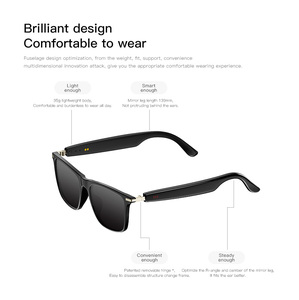
VALDUS 2026 Smart Audio Glasses Lightweight Prescription Ready IP68 Waterproof Touch Control 24H V6
- Prescription-ready custom lens rim
- IP68 deep industrial waterproofing
- 24-hour long battery life architecture
- Intuitive high-precision touch control
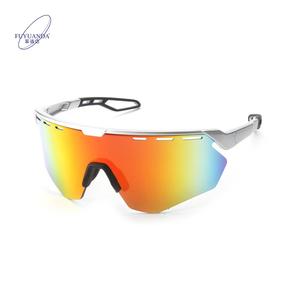
Men's Photochromic Prescription Sports Smart Glasses Polarized % UV Protection Basketball & Running
- Photochromic rapid tint adjustment
- Polarized UV400 optical safety lens
- Impact-resistant TR90 frame layout
- Optimized for sports & running ergonomics
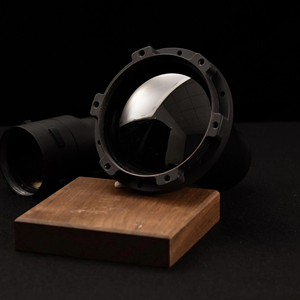
Infrared Convex Optical Welding Lens AI Smart Glasses with Prescription Lenses OEM Anti-Reflective
- Infrared shielding convex optical system
- Specialized anti-reflective AR coating
- Prescription adaptation for industrial safety
- 1-Year factory warranty coverage
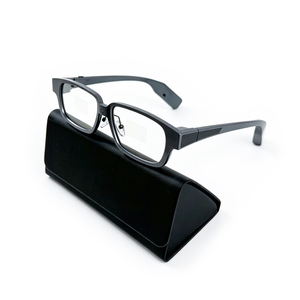
Diffractive Waveguide Smart AR Glasses Micro LED Dual Monocular Display 5.3 Infrared Pen Custom Rx
- Diffractive optical waveguide display
- Micro-LED dual monocular engine
- 5.3 Infrared stylus interaction tech
- Precision custom prescription clipping
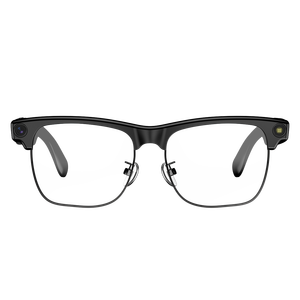
Recording Prescription Smart Glasses Camera AI Assistant Dual Camera Touch Control Magnetic Charging
- Dual camera 1200MP video recording
- Built-in multimodal AI visual assistant
- Convenient magnetic charging dock
- Ultra-fast Bluetooth 5.3 voice links
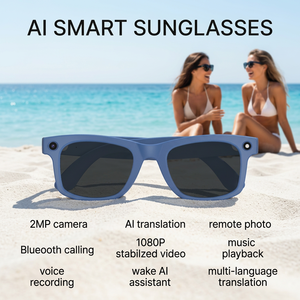
Holiday Prescription Smart Glasses With ChatGPT Assistant 1080P Video Camera Image Recognition Audio Slim
- Integrated ChatGPT vision & voice engine
- 1080P hands-free POV video capture
- Real-time image recognition software
- Slim profile comfortable frame weight
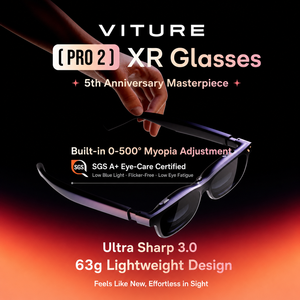
2026 Latest VITURE Pro2 XR AR Smart Glasses Prescription 0-500 Free Adaptation Touch Control Immersive
- 0-500 degree free myopia adaptation dial
- Immersive virtual big screen projection
- High contrast spatial XR display engine
- Premium ergonomic nose pad customization
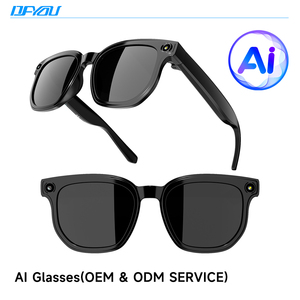
Reading Smart AI Glasses Bone Conduction with Camera Strong Sound Quality AI Prescription Lens for Men
- Advanced bone conduction sound drivers
- Discreet micro video camera capture
- Custom reading lens prescription cutting
- Acoustic leakage suppression technology
Comparative Matrix: Top Global Smart Eyewear Manufacturers
Benchmarking manufacturing powerhouses across R&D depth, prescription lens optical cleanrooms, wave-guide alignment capabilities, and OEM flexibility.
| Manufacturer Cluster / Region | Primary Technical Specialization | Rx Lens Fitting Mechanism | Waveguide & Display Integration | Cleanroom & Compliance Standards | MOQ Flexibility |
|---|---|---|---|---|---|
| Shenzhen Tech OEM Cluster (e.g., IMI / Valdus Labs) | AI Multimodal Integration, Micro-LED AR, Open-Ear Audio | Direct Magnetic Clip / Custom Grooved Rim (0-500° Adaptation) | Diffractive Optical Waveguide / Micro-OLED Dual Engine | Class 100,000 Cleanroom, ISO 13485, CE, FCC, RoHS, IP68 | High Flexibility (100 - 500 units for OEM) |
| Dongguan Precision Plastics & Optics Hub | TR90 Sports Frames, Titanium Hinge Mechanical Tooling | Interchangeable Photochromic & Polarized Prescription Insert | Basic Micro-Display & Audio PCB Frame Routing | ISO 9001, ANSI Z87.1 Safety Eyewear Standard | Moderate (500 - 1,000 units) |
| European High-End Optical Labs (Germany / Italy) | Luxury Frame Design, High-Index Optical Lens Surface Cutting | Direct Frame Glazing with Custom Interpupillary Distance (IPD) | Third-Party Module Assembly (Audio-focused) | CE Optical Class 1 Medical Device, ISO 14889 Compliance | Low Flexibility (Custom Batch / High Unit Cost) |
| North American Software-First Hardware Assemblies | Cloud Vision AI Micro-Models, SDK & Voice Engine API | Third-Party Optometrist Prescription Lens Mount Kit | Monocular HUD & Bone Conduction Audio Modules | FCC Class B, FDA Registered Medical Frame Facility | Strict (Contract Manufacturing 5,000+ units) |
Critical Sourcing Insights: China's Manufacturing Dominance
The manufacturing benchmark clearly demonstrates that Asian industrial clusters—specifically located in Shenzhen and Dongguan—possess unmatched end-to-end operational integration. Factories in these hubs bring together optoelectronic engineering, precision plastic injection molding, SMTA SMT high-speed circuit assembly, and dust-free optical lens installation under a single roof. This vertical integration reduces the standard product development cycle from 18 months down to less than 90 days for custom enterprise ODM projects.
Product Trends: The Evolution of Prescription Smart Eyewear
Examining key technological shifts in optical stack engineering, light engine micro-miniaturization, and multimodal artificial intelligence processing.
1. Diffractive Waveguide and Micro-LED Display Convergence
Legacy AR smart glasses relied on bulky birdbath optics or free-form prisms, which resulted in front-heavy frame geometries exceeding 80 grams. The industry standard for 2026 and beyond has migrated definitively to Diffractive Optical Waveguides paired with ultra-bright Micro-LED engines. Micro-LED chips offer pixel densities exceeding 5,000 PPI and luminance levels over 100,000 nits, allowing clear visual transmission even under direct sunlight. Crucially, diffractive waveguides feature thin planar glass substrates (less than 1.5mm thickness) that accept custom prescription lens lamination without distorting the digital light path.
Technical Highlight: Heat-Shrink Lens Groove Engineering
Prescription smart glasses frames must accommodate thermal expansion caused by onboard Bluetooth SoCs and AI co-processors. Advanced factories utilize memory-elastomer TR90-titanium composite frame rims. These rims maintain dimensional stability during lens bevel cutting, preventing optical axis alignment shifts and optical aberration over extended daily wear.
2. On-Device Multimodal AI Integration (ChatGPT & Local SLM)
Modern prescription smart glasses have evolved far beyond basic Bluetooth headsets for music playback and call management. The current product generation integrates dual-camera visual arrays capable of capturing 1080P to 4K first-person point-of-view (POV) media directly synchronized with visual artificial intelligence models. Users can look at foreign text, operational machinery, or botanical species and ask, "Translate this sign" or "Analyze this component for wear." System-on-Chip (SoC) architectures now feature hardware neural processing units (NPUs) running Small Language Models (SLMs) locally, cutting voice-to-answer latency down to under 800 milliseconds while reducing reliance on active cellular connections.
3. Photochromic, Electrochromic, and Anti-Reflective Optical Coatings
Because prescription eyewear users depend on smart glasses for all-day indoor and outdoor vision, adaptative optical coatings are now a standard OEM requirement. Leading factories integrate fast-acting photochromic molecular dyes directly into the outer optical resin or incorporate active liquid-crystal electrochromic films inside the lens stack. These technologies automatically adjust light transmittance from 85% clear indoors down to 15% dark outdoors within 15 seconds, delivering UV400 sun protection without requiring users to swap frame clip-ons.
Why Top Global Brands Partner With Our Factory Hub
Delivering world-class optical precision, strict industrial testing, and comprehensive white-label OEM/ODM solutions tailored for global distribution.
Class 100,000 Dust-Free Optical Cleanrooms
Lamination, waveguide alignment, and vision sensor assembly take place in automated ISO-certified cleanrooms, preventing particle contamination and ensuring crystal-clear lens transparency.
Sub-Millimeter Rx Lens Cutting Tolerances
Equipped with 5-axis CNC diamond lens edging machinery, our production line handles single-vision, progressive, and anti-reflective lenses with optical centration precision within ±0.1mm.
Directional Acoustic Leakage Cancellation
Featuring dual reverse-phase micro-speakers, our frames direct sound directly into the ear canal while cancelling external acoustic spill by over 30dB, safeguarding user call privacy in public spaces.
Complete Modular SDK & Companion Apps
We supply customizable iOS and Android SDKs, white-label cloud AI API endpoints, and OTA firmware updates, empowering brand partners to launch branded smart glasses software seamlessly.
B2B Sourcing Guide: Evaluating Factory Quality & Compliance
A step-by-step risk mitigation framework for importers, healthcare distributors, and consumer tech brands sourcing prescription smart eyewear.
Step 1: Validate Optical Frame Weight and Interpupillary Distance (IPD) Adjustability
Unlike standard static prescription frames, smart glasses house PCB boards, lithium-polymer batteries, touch sensors, and optical engines inside the frame temples. Procurement teams must audit the frame's weight distribution. A front-to-back weight ratio of 45:55 prevents slipping down the user's nose bridge. Furthermore, because fixed displays cannot easily shift position, factories must provide either mechanical nose-pad IPD adjustments or dual-display optical engines that cover an IPD range of 58mm to 72mm to avoid user eye strain and dizziness.
Step 2: Inspect Waterproofing and Battery Safety Certifications
Because prescription smart glasses are worn on the face during daily commutes, sports, and outdoor activities, sweat and rain resistance are essential. Leading OEM factories utilize low-pressure plasma nano-coatings alongside sonic enclosure welding to achieve IP67 or IP68 ingress protection ratings. Battery enclosures must feature dedicated hardware protection circuits (OVP/OCP) and carry UN38.3, MSDS, and IEC 62133 safety certifications to ensure safe operation against skin contact.
Step 3: Define Customization Options: OEM vs. ODM Protocols
| Customization Level | Typical Development Scope | Standard Sample Lead Time | Target Sourcing Partner Type |
|---|---|---|---|
| White-Label OEM | Logo silkscreen, custom packaging, localized manual, app branding | 7 - 14 Days | E-commerce sellers, optical retail stores, brand distributors |
| Custom ODM | Custom frame ID tooling, optical engine replacement, custom PCB design, unique AI SDK | 45 - 90 Days | Telecommunication operators, enterprise field solution providers, tier-1 tech brands |
Frequently Asked Sourcing & Technical Questions
Addressing key technical inquiries from B2B buyers, optical engineers, and global procurement officers.
How do prescription lenses integrate with smart optical displays without causing distortion?
Prescription smart glasses utilize two primary mounting architectures: (1) Magnetic / Snap-in Prescription Inserts positioned behind the primary display wave-guide, and (2) Direct Lens Glazing where the optical waveguide glass is laminated directly onto the front surface of a custom-cut prescription lens. In both cases, high-index (1.60, 1.67, or 1.74) resin lenses are used to keep thickness minimal, ensuring the optical display path remains perfectly focused on the user's retina without chromatic aberration.
What is the typical Minimum Order Quantity (MOQ) for custom OEM prescription smart glasses?
Standard white-label OEM orders featuring existing frame tooling, laser-engraved logos, and branded packaging typically start at 100 to 500 units per model. Full ODM projects involving custom frame injection molds, specialized optical engines, or bespoke hardware chipsets require higher MOQs, usually starting at 2,000 to 5,000 units depending on technical complexity.
Can our enterprise integrate our custom AI LLM or proprietary enterprise voice platform?
Yes. Our factory provides open BLE/Wi-Fi communication protocols and modular Android/iOS software development kits (SDKs). Your software engineering team can route camera image feeds, voice microphone streams, and touch event triggers directly to your proprietary cloud API endpoints, such as custom OpenAI models, Microsoft Azure AI solutions, or local enterprise servers.
Are camera-equipped smart glasses compliant with international privacy laws (e.g., GDPR)?
To comply with European (GDPR) and North American privacy regulations, our camera-integrated models feature a hardware-level LED recording indicator light on the front frame. When the video sensor or snapshot function is activated, the LED automatically illuminates to notify bystanders. Additionally, camera-free audio smart glasses models are available for environments where recording devices are restricted.
What international quality certifications do your prescription smart glasses hold?
Our manufacturing facilities operate under ISO 9001 and ISO 13485 (Medical Devices) quality management systems. All exported smart glasses products hold CE, FCC, RoHS, REACH, and UN38.3 (battery safety) certifications, alongside IP68 dust and water ingress protection validation test reports.
What is the standard warranty and RMA policy for international B2B orders?
We provide a standard 12-month factory warranty on all electronic PCBs, displays, optical engines, and frame structural components. For international volume buyers, we offer a 1% spare parts batch allocation (RMA buffer) shipped alongside volume orders, or direct modular component replacements to support fast local after-sales service.
Scale Your Smart Eyewear Portfolio Today
Connect directly with our optoelectronic manufacturing engineering team to request sample evaluations, factory pricing tier matrices, and technical OEM/ODM documentation.