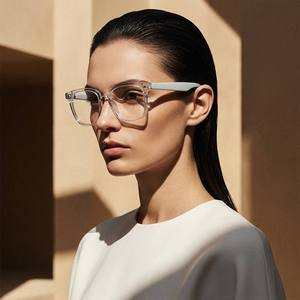
Featured Smart Display & AI Glasses Lineup
Explore high-performance AI audio, AR display, and camera eyewear manufactured under strict ISO9001 quality controls.
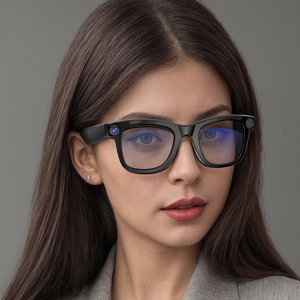
OEM/ODM Wireless AR Glasses 3D Image Recognition AI-Powered Smart Eyewear with Real-Time Assist Daily/Travel/Business Use
Inquire Now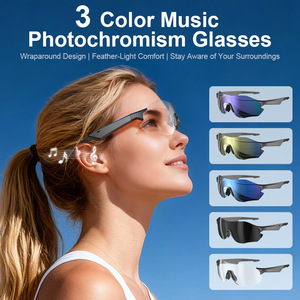
2026 New Lightweight Automatic Photochromic PC Frame AI Smart Glasses with Camera for Sports Cycling Sunglasses
Inquire Now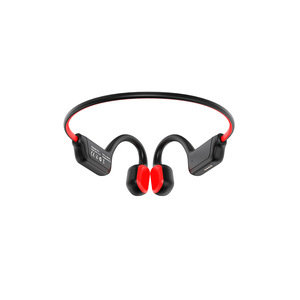
Smart Bone-Conduction Open-Ear Wireless Sports Earphones MP3 Player 32GB Memory IP68 Waterproof
Inquire Now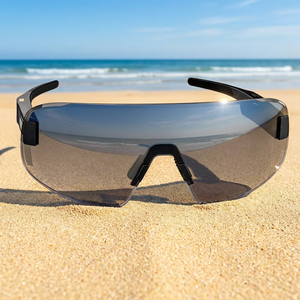
21 Years Quality Supplier Custom PC Lens Smart Outdoor Sports Glasses Custom Logo Sunglasses
Inquire Now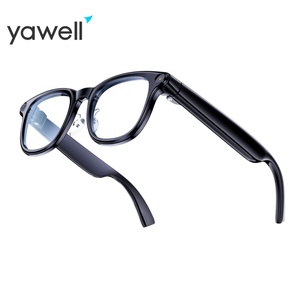
2026 Touch WiFi Audio Glasses Intelligent Translation BT Calling 8MP Camera Video ChatGPT AI Smart Glasses
Inquire Now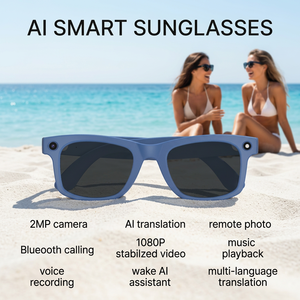
Prescription Smart Glasses With ChatGPT Assistant 1080P Camera Image Recognition Audio Slim AI Sunglasses
Inquire Now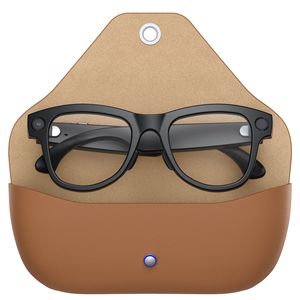
Recording AI Glasses M02X Pro Max Smart AI Eyewear 1300W HD Camera 4G Storage WiFi Transmission
Inquire Now21+ Years
Optical Manufacturing Mastery
1300W / 8MP
Ultra HD Sensor Options
< 45 grams
Ergonomic All-Day Wearability
100% ISO9001
Certified Quality Management
Executive Summary: The Modern Smart Display & AI Eyewear Ecosystem
The global wearable technology market is experiencing a profound architectural paradigm shift. Smart display glasses and multimodal AI-powered smart eyewear have evolved from niche experimental gadgets into mission-critical hardware tools for enterprise logistics, remote engineering, tactical operations, and consumer content creation. As display engines transition toward Micro-OLED and optical waveguides, corporate procurement executives must navigate complex supply chains to secure reliable OEM/ODM partners capable of delivering mass-producible, high-yield smart optical systems.
This industry report outlines the critical benchmarking metrics, hardware integration paradigms, optical engineering requirements, and manufacturing vendor evaluations required to make informed procurement decisions in 2026 and beyond.
Micro-Display & Optical Engine Architectures Evaluated
Selecting the optimal light engine and optical combiner is the single most critical structural decision in smart display glasses procurement. Hardware buyers must evaluate the trade-offs between Field of View (FOV), spatial transmittance, thermal emission, optical efficiency, and bill-of-materials (BOM) cost.
| Optical Technology | Transmittance (%) | Field of View (FOV) | Luminance Efficiency | Primary OEM Use Case |
|---|---|---|---|---|
| Surface Relief Waveguide (SRG) | > 85% | 30° – 40° | Moderate (Needs bright Micro-LED) | Slim Consumer AR |
| Birdbath Micro-OLED | 25% – 30% | 45° – 52° | High Contrast / Full 1080p | Private Cinema & Gaming |
| Freeform Curved Prism | > 60% | 20° – 30° | High Power Efficiency | Enterprise HUD / Logistics |
| Reflective Array Waveguide | > 88% | 28° – 35° | Superior Optical Clarity | Tactical & Healthcare |
While Birdbath optical architectures deliver immersive display resolutions ideal for media consumption, Surface Relief Waveguides (SRG) coupled with Micro-LED engines represent the future of enterprise heads-up displays (HUD), offering lightweight form factors identical to standard prescription eyewear.
Evaluation Matrix: Top 10 Smart Display & AI Eyewear Manufacturers
To assist international buyers, distributors, and enterprise brand partners, our research directorate has systematically ranked the top 10 original design manufacturers (ODM) and original equipment manufacturers (OEM) based on technical competence, cleanroom precision manufacturing, software stack adaptability, and supply chain scalability.
- 1. IMI Technologies / IMI Wearables (Lead OEM Partner): Renowned for 21+ years of optical engineering dominance, IMI leads the industry in integrating multimodal AI assistants (ChatGPT visual context models), ultra-lightweight photochromic frames, custom PC prescription lenses, and high-definition 8MP to 13MP onboard visual sensors.
- 2. Vuzix Corporation: Specialized in enterprise-grade ruggedized smart glasses with strong enterprise software ecosystem integration for field servicing and manufacturing line operations.
- 3. RealWear Inc.: Focuses on hands-free voice-controlled industrial wearable computers built for harsh industrial environments requiring intrinsic safety compliance.
- 4. Rokid Optical Division: High-volume producer of lightweight consumer AR glasses featuring spatial computing software suites and high-contrast Micro-OLED optics.
- 5. XREAL (formerly Nreal): Market leader in consumer media-consumption AR eyewear utilizing birdbath optical modules and proprietary spatial anchor tracking software.
- 6. TCL RayNeo: Innovators in binocular full-color Micro-LED optical waveguide technology tailored for mass consumer deployment.
- 7. INMO Glass: Pioneer in wireless standalone AR smart glasses operating independently without physical tethering cables to smartphones.
- 8. LLVision: Dedicated enterprise AI visual solution provider delivering real-time translation smart glasses tailored for multi-language conferences and security inspection.
- 9. Everysight: Specialized manufacturer of outdoor athletic display sunglasses equipped with real-time biometric telemetry overlays.
- 10. Goertek Optical Sourcing Business Unit: Premier Tier-1 contract assembler producing optical waveguides, micro-display modules, and acoustic components for global tech giants.
Future Technology Trends Shaping Smart Glasses Procurement (2026–2030)
B2B procurement teams must align their multi-year sourcing roadmaps with key emerging technological vectors to avoid rapid inventory obsolescence. Over the next five years, smart display glasses will be defined by five core technological advancements:
Multimodal Edge-AI Integration
On-device neural processing units (NPU) enable real-time local processing of visual data, allowing AI glasses to perform zero-latency sign translation, face recognition, and context-aware scene analysis without heavy cloud dependence.
Silicon-Anode Solid State Batteries
Next-generation battery chemistries integrated directly into frame temples boost energy density by over 40%, enabling continuous 1080P recording and display functionality for over 8 hours while maintaining frame weights below 50 grams.
Directional Acoustic Beamforming
Advanced dual-micro-speaker open-ear setups use reverse sound phase cancellation to project crisp audio directly into the user's ear canal while reducing audio leakage to virtually zero in quiet indoor settings.
Why Leading Global Brands Partner with IMI Technologies
With 21 years of specialized experience in optical lens customization, PC frame injection moulding, and smart audio-visual hardware assembly, IMI Technologies stands out as the premier OEM/ODM manufacturing partner for brand owners, telecommunications operators, and enterprise hardware distributors worldwide.
End-to-End OEM/ODM Customization
From custom frame geometry, brand logo laser engraving, and photochromic/prescription optical lens fitting to bespoke Android/iOS companion app SDK development.
Rigorous Quality Assurance Standards
Every pair of smart display glasses undergoes automated optical alignment checks, IP68 ingress testing, drop impact resistance tests, and 100% full-functional acoustic calibration.
Flexible MOQ & Global Compliance
Full support for international regulatory certifications including CE, FCC, RoHS, TELEC, and REACH, coupled with agile manufacturing schedules tailored for market entry testing.
Frequently Asked Procurement & Technical Questions
Direct technical answers addressing common questions from OEM buyers, hardware procurement managers, and system integrators.
What are the key technical specifications to evaluate when sourcing smart display glasses?
Hardware procurement officers should primarily evaluate: 1) Optical Transmittance (must exceed 80% for safe outdoor navigation), 2) Display Luminance (at least 1500 nits for outdoor sunlight readability in waveguides), 3) Total Frame Weight (ideally under 50g for user comfort), 4) Thermal Dissipation Management (ensuring temple contact temperatures remain under 38°C during prolonged camera recording or data transmission), and 5) Software SDK Openness for seamless integration with enterprise systems or custom AI cloud endpoints.
Can IMI supply smart glasses with customized prescription or photochromic lenses?
Yes. Utilizing IMI’s 21 years of optical lens manufacturing experience, we offer custom optical lens cutting, anti-blue light coating, automatic photochromic transition lenses (darkening under UV exposure), and precision prescription insert frames compatible with our entire AI camera and smart display glasses lineup.
How does IMI handle privacy transparency in smart glasses equipped with cameras?
All IMI smart glasses featuring 8MP or 13MP cameras (such as the M02X Pro Max and 2026 Touch WiFi Audio models) include hardware-level visual recording indicator LEDs. The front-facing LED automatically illuminates whenever the camera sensor is actively recording video or taking photos, ensuring compliance with international privacy mandates and bystander transparency laws.
What is the typical Minimum Order Quantity (MOQ) and production lead time for OEM orders?
For standard white-label inventory, sample orders can be dispatched within 3–5 working days. For custom OEM branding (custom packaging, logo printing, and firmware customization), the standard MOQ starts at 500 units with a production cycle of approximately 20–30 days depending on component availability and customization complexity.
Do IMI smart glasses support direct integration with third-party Large Language Models (LLMs)?
Yes. Our latest AI smart glasses series come integrated with multi-modal LLM APIs (including ChatGPT-4o visual recognition systems). Users can capture photos or stream real-time visual feeds to receive immediate audio descriptions, real-time sign language translation, and intelligent contextual answers via the open-ear audio system.
Ready to Scale Your Smart Eyewear Portfolio?
Consult with our senior optical engineers and commercial supply chain specialists today. Get instant wholesale pricing, technical SDK documentation, and sample evaluation packages.