Featured OEM/ODM Wireless Audio & Smart Eyewear Catalog
Explore flagship smart audio glasses, AI translation frames, and AR vision wearables manufactured by leading Chinese supplier facilities for international B2B buyers.


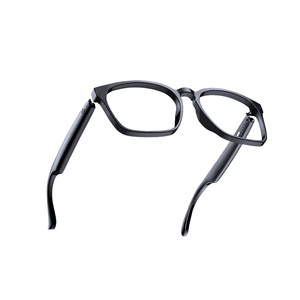
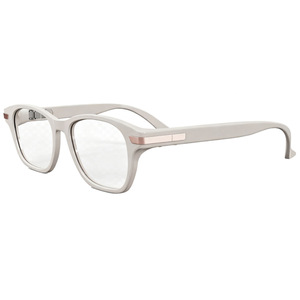

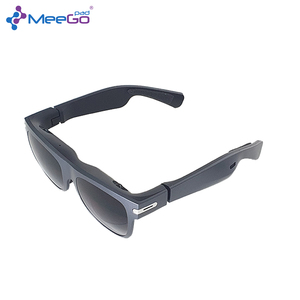
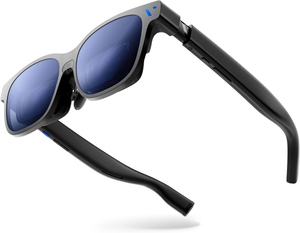

China's Smart Wireless Audio Eyewear Manufacturing Landscape
The global convergence of classical eyewear design with advanced micro-acoustics and generative AI has transformed wireless audio glasses from a niche luxury tech gadget into a primary consumer wearable category. China—specifically the industrial clusters spanning Shenzhen, Dongguan, and Wenzhou—serves as the undisputed epicenter of smart audio eyewear R&D and mass manufacturing.
By leveraging an unparalleled supply chain integration, Chinese factories seamlessly blend precision optical lens processing, high-density SMT (Surface Mount Technology) assembly, micro-battery packaging, and directional acoustic tuning under rigid ISO9001 and ISO14001 operational frameworks.
For international buyers, consumer electronics brands, and optical retail chains, navigating top China wireless audio eyewear manufacturers requires understanding both hardware engineering maturity and software integration services. Today's top-tier ODM partners provide full-stack solutions: from custom ID (Industrial Design) frame tooling and Rx (prescription lens) integration to localized LLM voice assistant SDK customization.
Key Technological & Product Development Trends (2025–2030)
The wireless audio eyewear sector is accelerating past basic Bluetooth 5.0 music playback toward multi-modal sensory computing. B2B procurement teams must align their product roadmaps with the following technological paradigm shifts:
Directional Acoustic Sound Cavities
Next-gen frames implement dual-driver micro-speakers coupled with reverse phase audio cancellation algorithms. This focuses sound directly into the ear canal while minimizing acoustic leakage by over 85%, ensuring private calls in public environments.
Low-Power Vision-AI Integration
Equipped with ultra-compact 8MP to 12MP camera modules and edge computing AI microchips, camera-enabled smart frames now perform real-time optical character recognition (OCR), multi-language speech translation, and visual scene analysis via ChatGPT integrations.
High-Density Flexible Battery Micro-Packaging
Advanced solid-state and curved lithium-polymer batteries housed inside temple arms achieve energy densities exceeding 220Wh/kg. Users gain up to 8 hours of continuous talk time while preserving sleek, ergonomic frame aesthetics indistinguishable from traditional eyewear.
OEM/ODM Strategic Insight: Modern consumers reject heavy, bulky wearable hardware. Sourcing managers must prioritize manufacturers utilizing TR90 ultra-lightweight memory polymer, Swiss EMS materials, or aero-grade titanium alloys to ensure frame weights remain strictly under 40 grams for all-day wearing comfort.
Future Procurement & Sourcing Strategies for Enterprise Buyers
As retail channels diversify across e-commerce, consumer electronics chains, and traditional optometry stores, B2B sourcing strategies must evolve to balance product differentiation with regulatory compliance.
1. Customization Depth (SKU Tiering)
Top China wireless audio eyewear factories offer modular manufacturing architectures. Sourcing teams should select suppliers capable of delivering three distinct tier options from a single tooling platform:
- Audio-Only Tier: Optimized for office workers, commuters, and privacy-restricted environments (No camera module, dual mic ENC noise cancellation).
- AI Camera & Recording Tier: Tailored for content creators, field engineers, and vloggers (Hands-free 1080p/4K POV video, magnetic fast charging).
- Full AR Display Tier: Designed for enterprise industrial operations and gaming (Micro-OLED waveguides, 3DoF tracking, real-time transcription).
2. Technical Benchmark Matrix for Quality Assessment
| Evaluation Parameter | Standard Market Level | Tier-1 Factory Premium Level | B2B Sourcing Value Impact |
|---|---|---|---|
| Bluetooth Chipset Architecture | Generic Bluetooth 5.0 (Single Core) | Qualcomm SW5100 / BES2500 (Dual Core) | Reduces audio latency to <40ms; stable HD voice codec support (aptX/AAC). |
| Acoustic Leakage Control | Basic Rear Port Vents (<6dB isolation) | Reverse-Phase Acoustic Cancellation (>18dB isolation) | Prevents neighboring individuals from hearing private phone calls. |
| Frame Water Resistance | IPX2 (Sweat Resistance) | IPX4 - IPX7 (Full Hydrophobic Nanocoating) | Ensures durability against rain, sweat, and outdoor sports use. |
| Optical Lens Versatility | Fixed Acrylic Lenses | Quick-Release Tac Polarized UV400 / Rx Prescription Ready | Unlocks optical chain retail channels and prescription glass replacement. |
3. Regulatory Compliance and Global Certification Frameworks
Importing smart audio eyewear into Western markets mandates compliance beyond standard consumer electronics. Ensure your manufacturing partner provides certified documentation for:
• FCC / CE-RED / TELEC: RF radio frequency emissions and Bluetooth transceiver safety standards.
• RoHS / REACH / Prop 65: Skin-contact material safety tests for temple tips and nose pads.
• FDA CDRH & ISO 12312-1: Optical lens impact resistance (Drop-Ball Test) and UV filter rating validation for sunglass variants.
Enterprise Capabilities of IMI Technologies (Supplier Profile)
As a leading pioneer in China’s smart eyewear manufacturing sector, IMI Technologies (IMI Wearables) bridges cutting-edge micro-electronics R&D with full-scale automated optical manufacturing. Supporting global distributors, retail brands, and tech innovators, IMI provides end-to-end OEM and ODM services engineered for high performance and reliable market expansion.
Turn-Key ID & Mechanical Tooling
In-house optical CNC machining, rapid prototyping, and custom mold creation allow partner brands to launch bespoke frame aesthetics within 45 to 60 days from initial industrial design concept approval.
Acoustic Anechoic Chamber Testing
Every audio eyewear batch undergoes rigorous acoustic frequency response curve sweeping utilizing Head & Torso Simulators (HATS) to guarantee pristine bass response, vocal clarity, and leakage suppression.
Flexible SDK & AI Software Integration
IMI supports international brand partners with custom iOS/Android companion apps, OTA firmware updating infrastructure, and API hookups for localized voice AI platforms and real-time speech translation cloud services.
Frequently Asked Questions (FAQ) for B2B Sourcing Managers
Here are expert answers to critical questions buyers encounter when selecting China wireless audio eyewear manufacturers and factory partners.
What is the standard Minimum Order Quantity (MOQ) for custom OEM/ODM smart audio glasses?
For standard ready-to-ship models with custom logo silk-screening or laser engraving, MOQs typically start at 100 to 500 units per style. For fully customized frame tooling, custom color injection (TR90 colors), or bespoke PCBA chip modifications, the standard factory MOQ ranges from 1,000 to 3,000 units depending on components.
How do manufacturers solve privacy concerns regarding camera-equipped smart glasses?
Top China factories integrate hardware-level LED indicator lights directly onto the front frame fascia. Whenever photos or videos are being recorded, the LED stays illuminated or pulses visibly to inform nearby individuals. Additionally, camera-free audio-only frames are offered for privacy-sensitive corporate and educational markets.
Can prescription (Rx) lenses be installed in wireless audio frames?
Yes. Premium audio frames are engineered with standard optical groove depths and flexible TR90 rim memory. Optical shops and prescription labs can easily cut and fit single-vision, progressive, blue-light blocking, or photochromic prescription lenses without damaging the embedded temple electronics.
How is acoustic leakage prevented in open-ear smart glasses?
Manufacturers utilize dual speaker port positioning combined with reverse phase audio tuning. While the primary sound wave is directed downwards into the user's ear canal, a secondary acoustic wave with inverted polarity is emitted outwards to phase-cancel escaping sound pressure, drastically reducing ambient sound leakage.
What is the typical battery lifespan and charging method for audio eyewear?
Most frames feature dual batteries embedded in both temple arms (capacity ranges from 100mAh to 220mAh total). This provides 4 to 8 hours of continuous audio playback or talk time. Charging is handled via customized high-reliability magnetic Pogo-pin cables or protective fast-charging storage cases.
What testing standard operating procedures (SOP) are conducted before shipment?
Leading factories execute comprehensive Quality Assurance checks including: 10,000-cycle temple hinge flex endurance tests, 1.5-meter drop testing, thermal shock testing (-20°C to 65°C), salt spray corrosion tests for charging pins, IPX moisture ingress tests, and 100% automated Bluetooth RF/acoustic frequency response calibration.
Ready to Scale Your Smart Eyewear Lineup?
Partner with top China wireless audio eyewear manufacturers. Get direct factory quotation, evaluate engineering samples, and customized OEM/ODM production roadmaps today.
Contact Us